The World's
Finest Fibre,
Explained.
From the high-altitude plateaus of Ladakh to luxury boutiques worldwide — discover the true story of cashmere: its science, heritage, sustainability, and how to identify genuine quality.

Fine Cashmere Diameter
per year
merino wool
Kashmiri heritage
Softer Than Silk.
Warmer Than Wool.
Genuine cashmere comes from just one source: the fine undercoat of the Changthangi goat, bred in the harsh Himalayan heights of Ladakh, Kashmir, Mongolia, and Inner Asia.
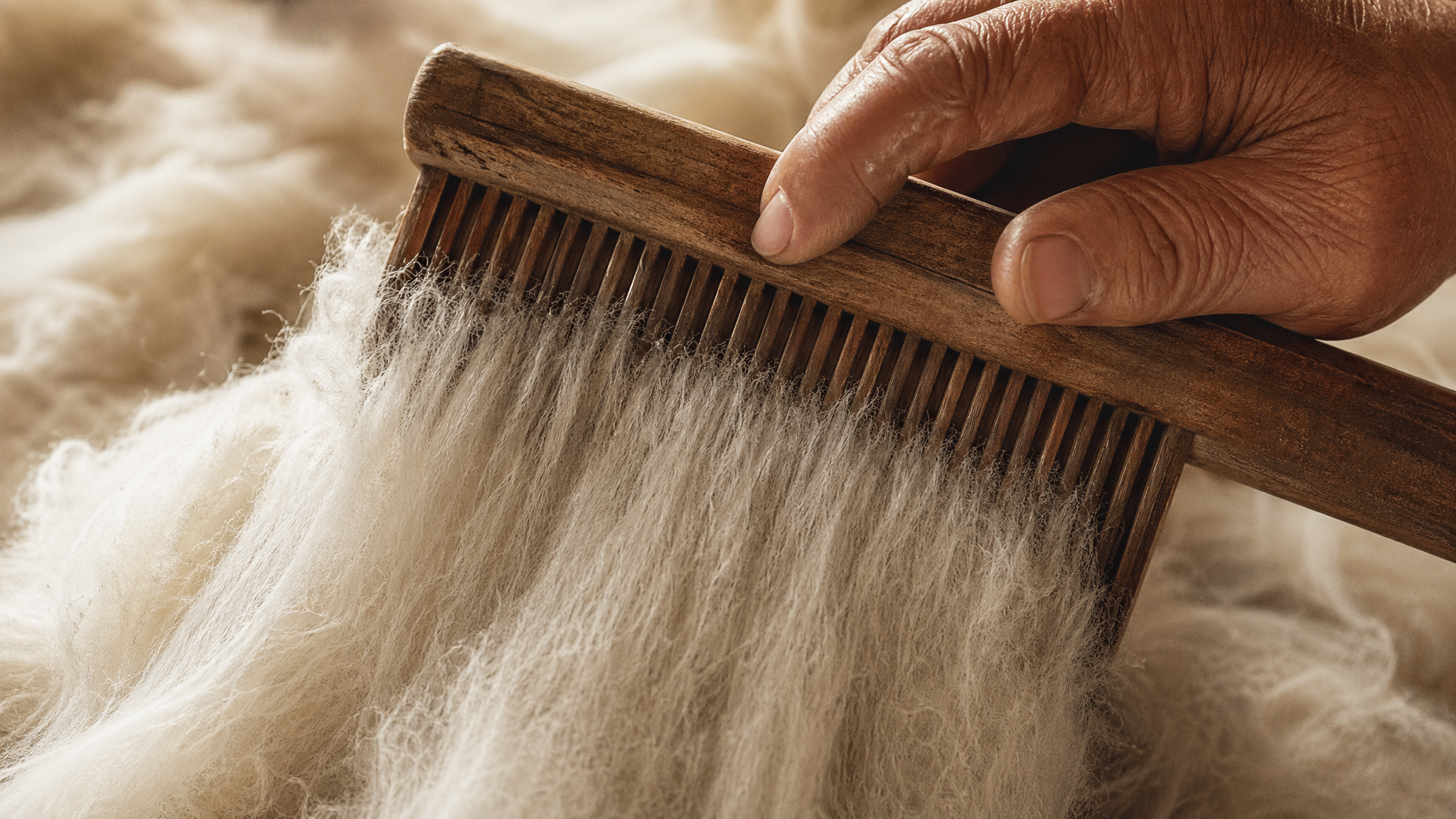
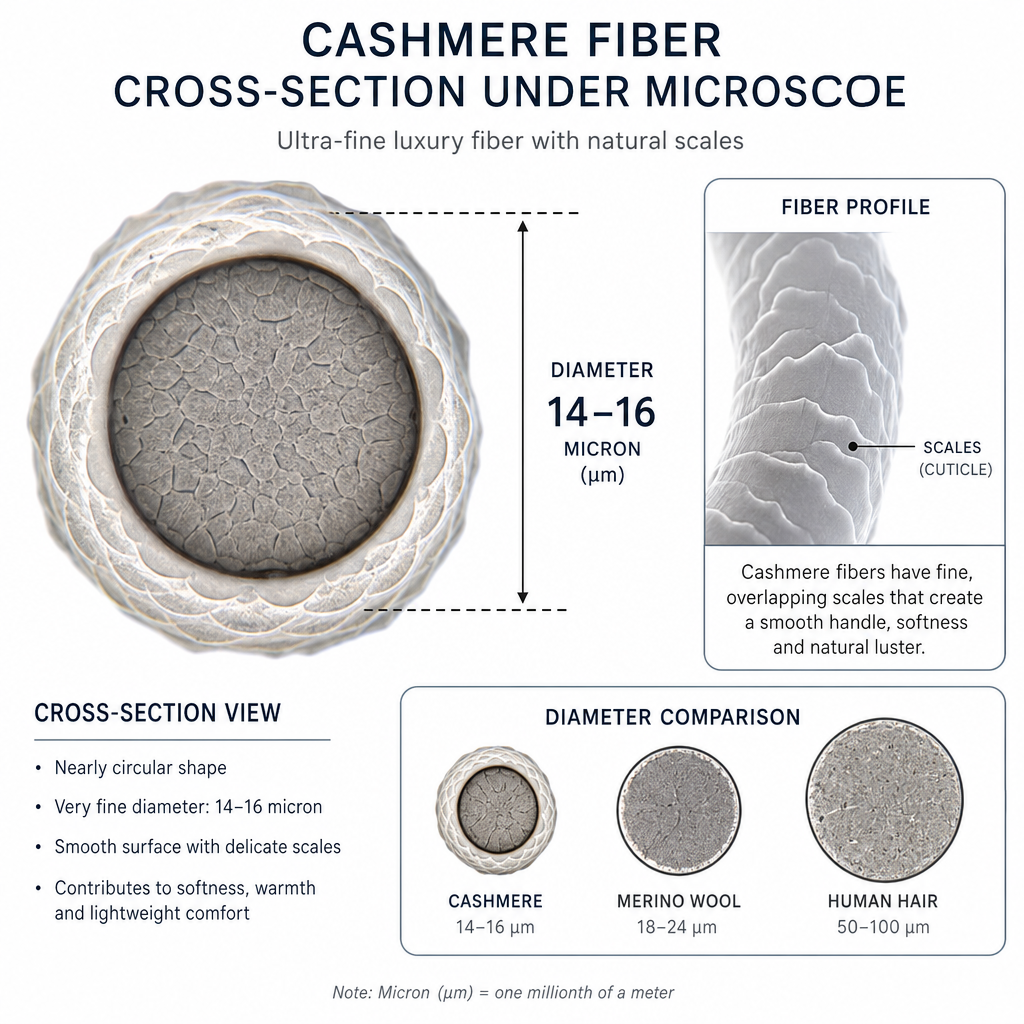
At 14–19 microns in diameter — so thin it is invisible to the naked eye — cashmere fibres are among the finest natural materials known to humanity. Each fibre is hand-combed during spring moulting, a labour-intensive process that has barely changed over 500 years.
Yet in a market flooded with mislabelled blends, synthetic imitations, and inflated claims, knowing what real cashmere looks, feels, and costs is more important than ever.
Explore Our Complete Guide
Eight in-depth sections covering every aspect of cashmere — from fiber science to fashion, from ethics to care.
What is Cashmere?
Origins, fiber science, micron counts & comparisons with wool and Pashmina.
Read more →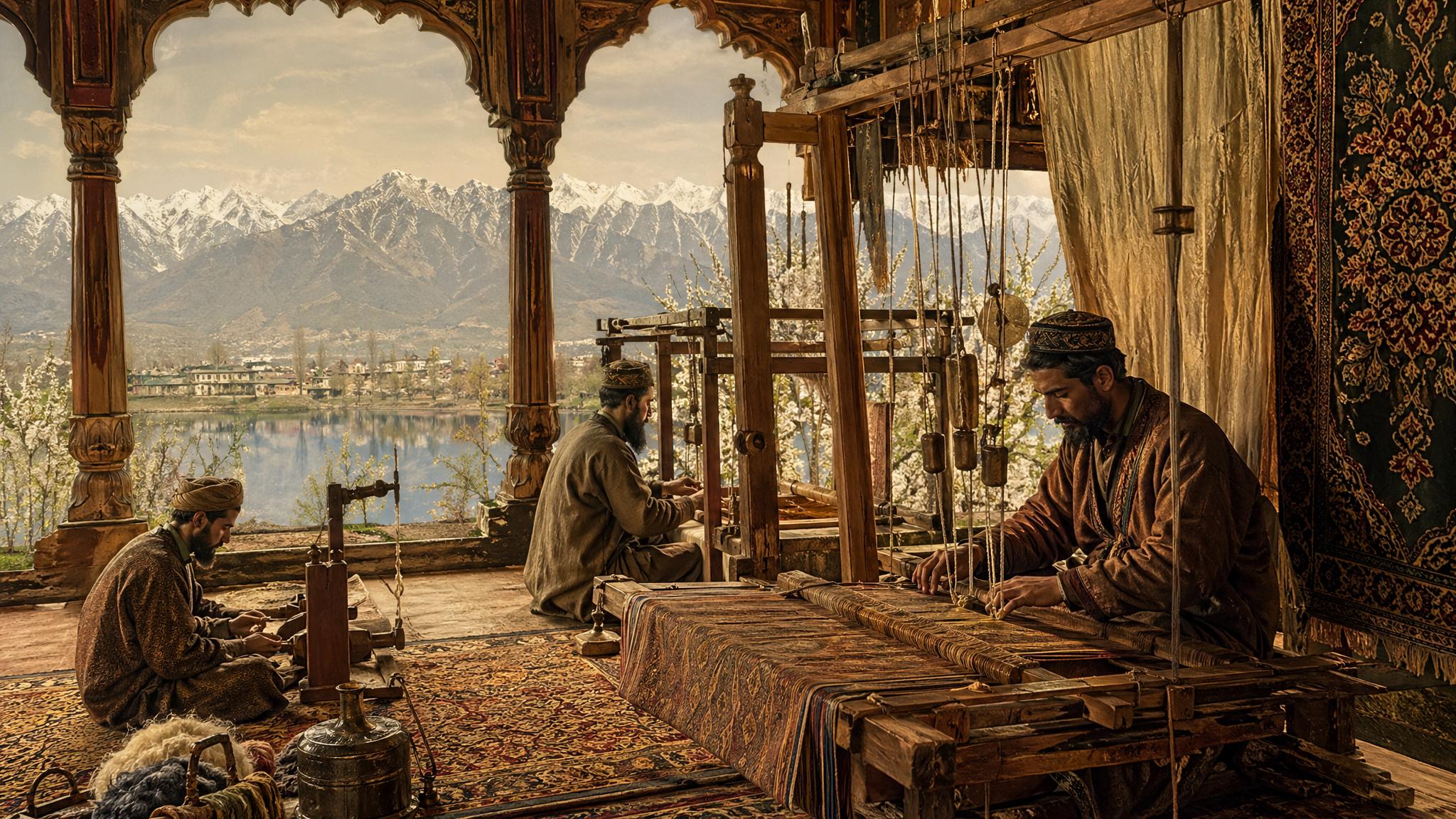
History & Heritage
500 years of Kashmiri craft — from Mughal courts to modern global trade.
Read more →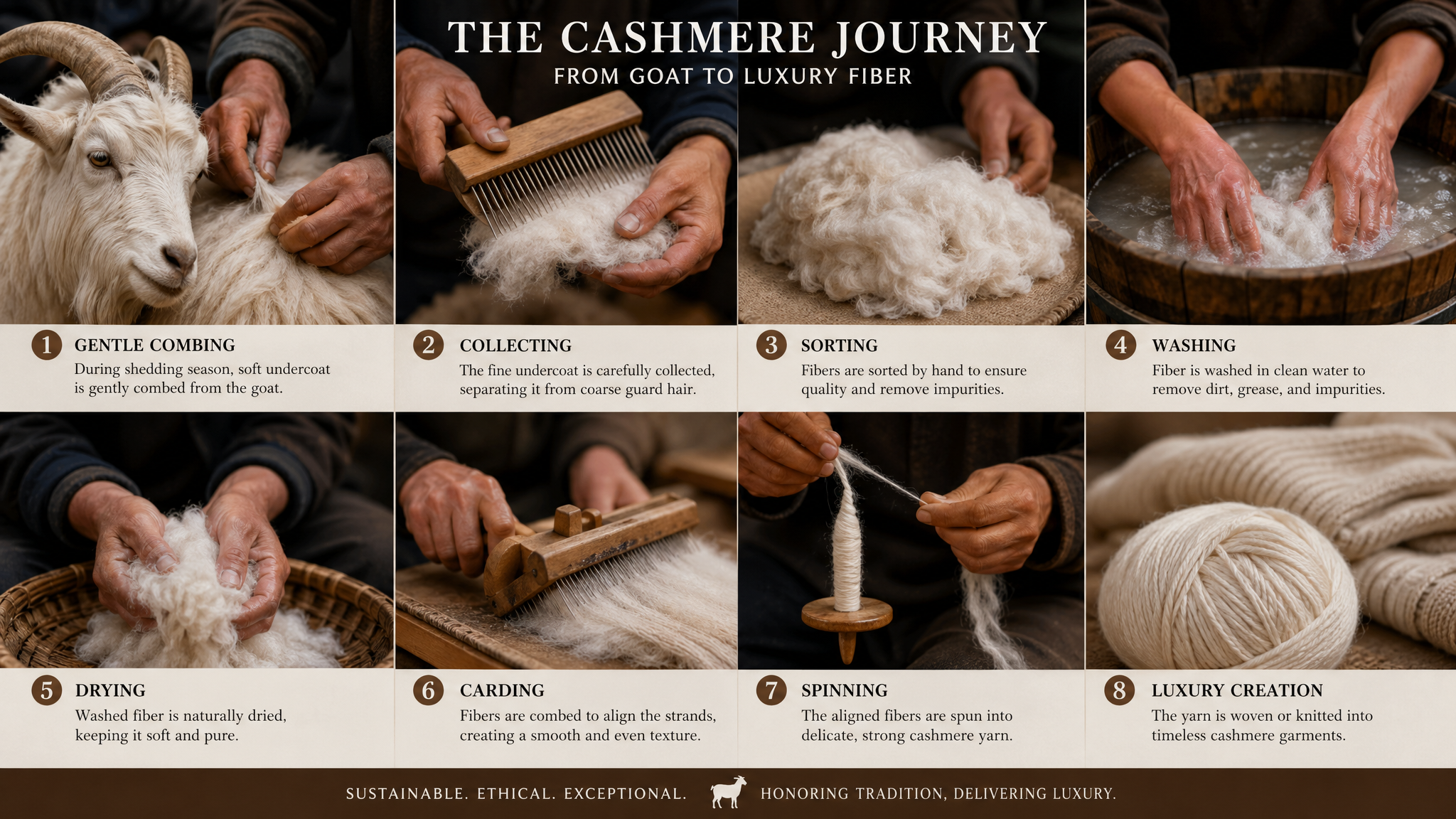
Production Process
Step-by-step from goat undercoat to finished yarn — combing, sorting, spinning.
Read more →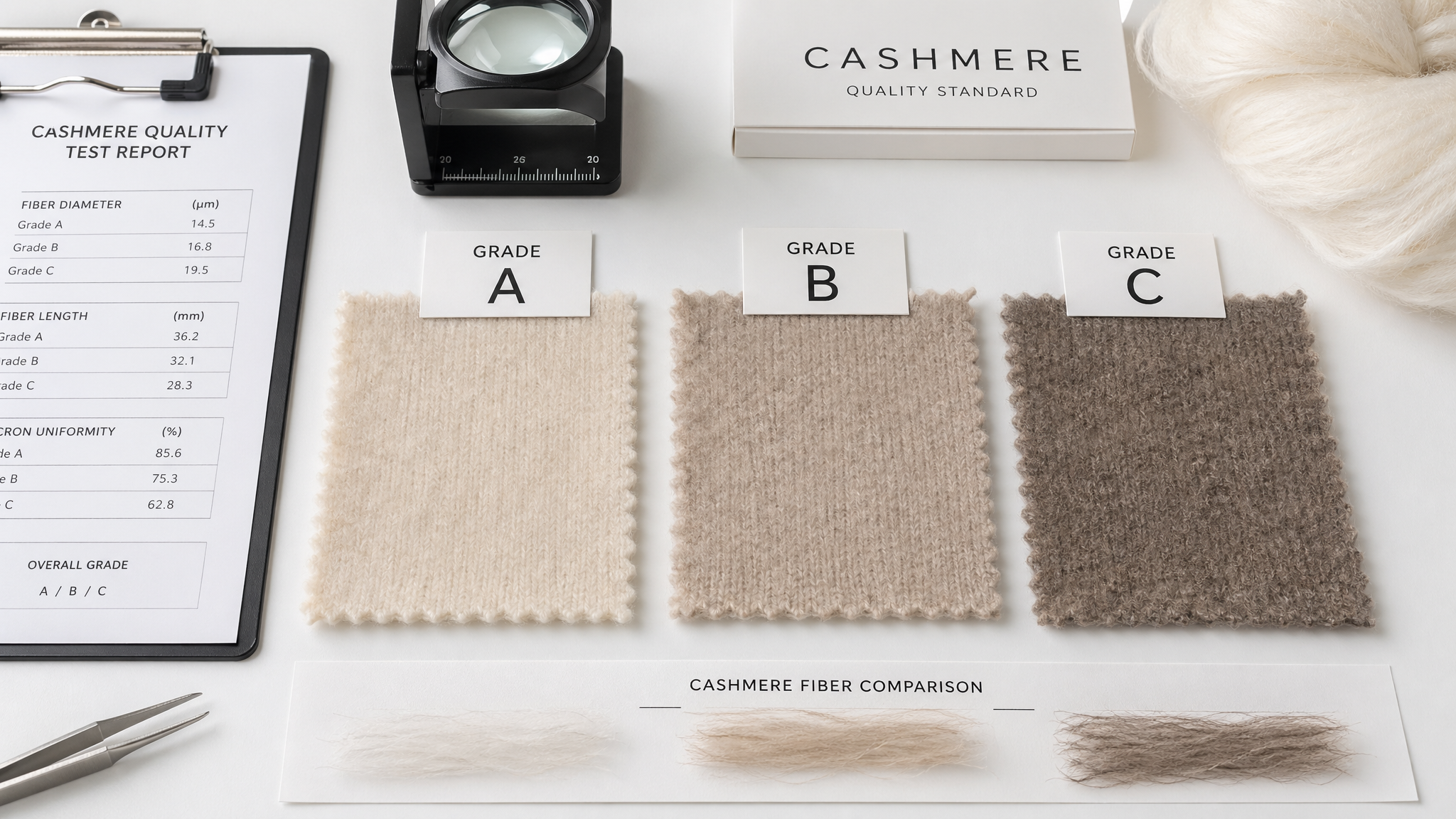
Quality Guide
Identify real cashmere, understand grades A/B/C, debunk common myths.
Read more →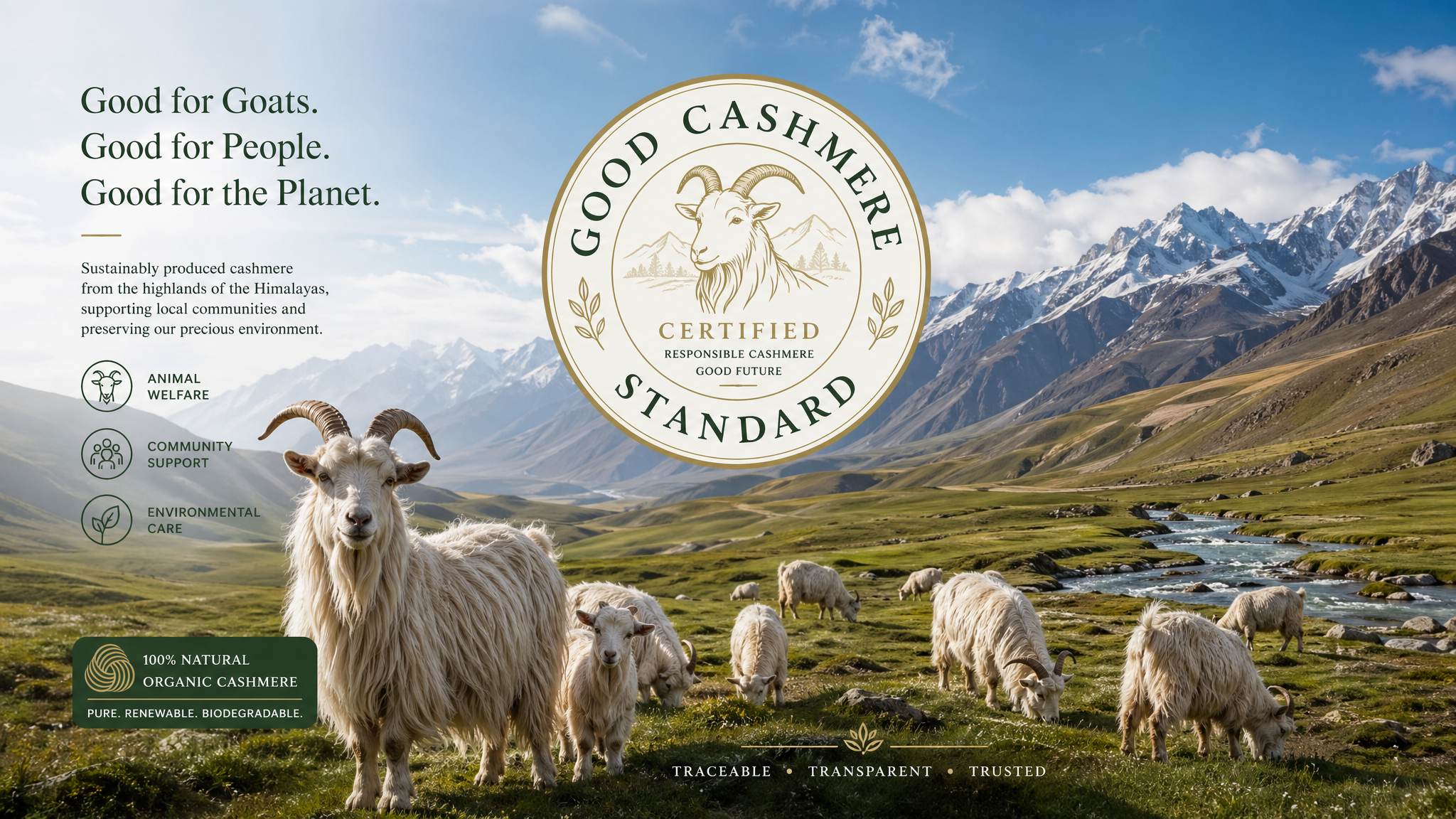
Sustainability & Ethics
Animal welfare, overgrazing realities, GCS certification and recycled options.
Read more →
Care & Maintenance
Washing, drying, storage, pilling removal — make your cashmere last decades.
Read more →
Born in the
Himalayas of
Ladakh & Kashmir
Long before cashmere became a global luxury, the Changtang plateau of Ladakh was home to nomadic Changpa herders raising the Changthangi goat — the only breed capable of producing true Pashmina cashmere at altitudes above 4,500 metres.
The handloom traditions of the Kashmir Valley — kani weaving, sozni embroidery, papier-mâché dyeing — represent one of humanity's most refined artistic heritages. Today, these crafts face real threats from industrialisation and imitation.
Explore the Heritage Story →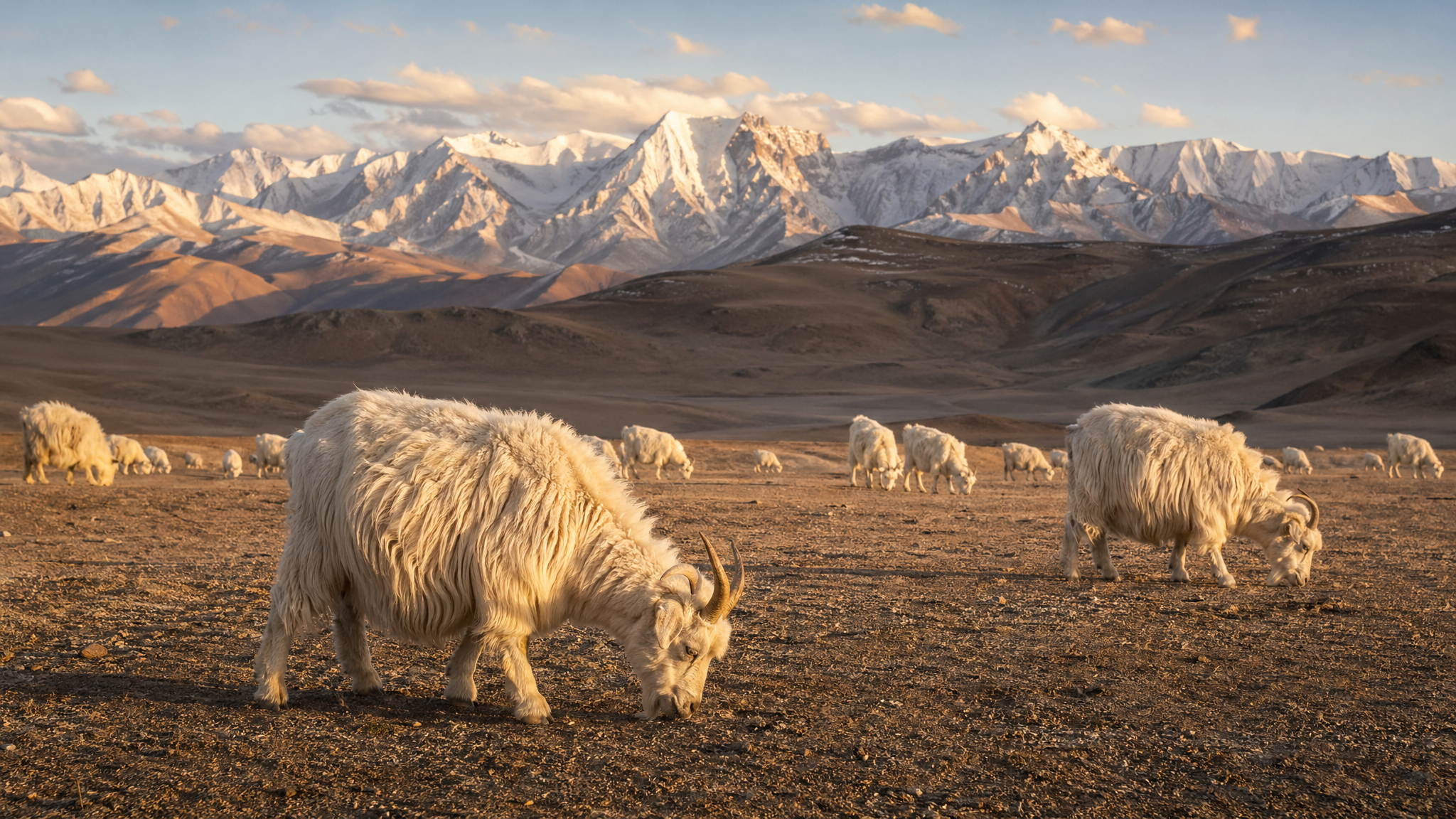
Cashmere Myths, Debunked
The cashmere industry is rife with misconceptions. Here are four of the most common — and the truth behind each.
"Real cashmere only comes from Italy or Mongolia"
India — specifically Ladakh's Changtang region — produces some of the world's finest Pashmina cashmere, harvested by the Changpa nomads at over 4,500m altitude.
Kashmir has been producing fine cashmere for over 500 years
The Kashmir Valley was the global epicentre of cashmere weaving from the 15th century. The term "cashmere" itself derives from "Kashmir."
"Cashmere is always itchy and delicate"
High-quality Grade A cashmere (14–15.5 microns) is completely itch-free and softer than the finest merino. Itchiness indicates low-grade or blended product.
With proper care, cashmere becomes softer with age
Unlike synthetic fibres, genuine cashmere actually softens and improves with careful washing and wear. A well-cared-for piece can last 30+ years.
Pashmina: Where Art Meets Fibre
Pashmina is not just a type of shawl — it is a 500-year-old art form. Woven from the finest cashmere fibres (12–16 microns), a single Pashmina shawl requires up to 72 hours of skilled handloom work.
The intricate kani weave technique — using dozens of small wooden spools called kanis — creates complex paisley and floral patterns that can take three to five years to complete for a single shawl.
Today, genuine handwoven Pashmina carries a GI (Geographical Indication) tag, protecting the heritage of Kashmiri artisans against mass-produced imitations.
Explore Pashmina Heritage →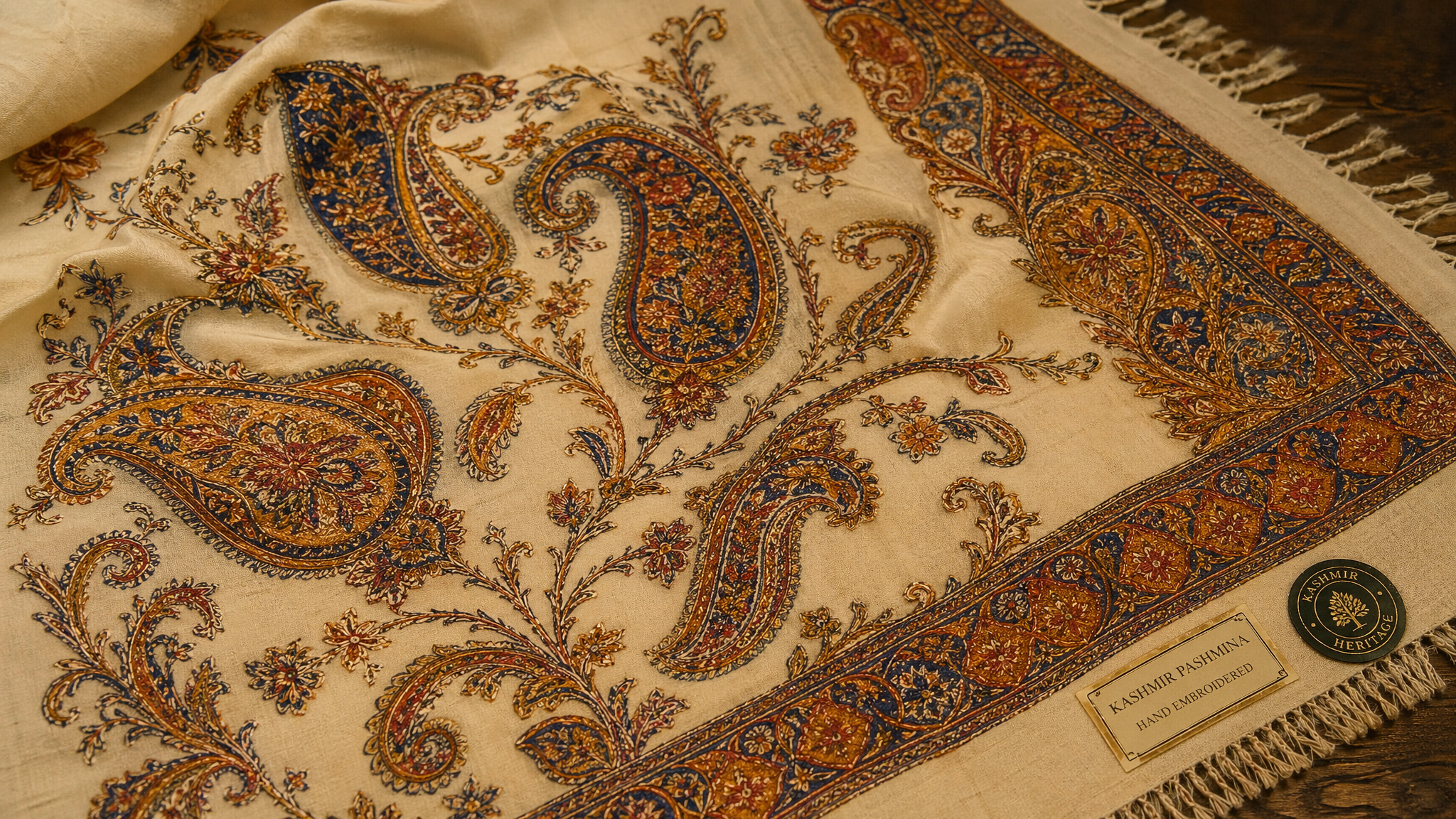
Your Cashmere Learning Path
New to cashmere? Follow this curated sequence from first principles to confident buyer — each guide builds on the last.
The Cashmere Insider
Monthly deep-dives on quality, sustainability, heritage and care — straight to your inbox. No spam, unsubscribe any time.
🔒 We never share your data. Read our Privacy Policy.