500 Years of Craft

History & Heritage of Cashmere

From the nomadic Changpa herders of Ladakh to the looms of Srinagar and the boutiques of Paris — the extraordinary journey of the world's finest fibre.

⏱ 10 min read

A Fibre Woven Into Civilisation

The history of cashmere is inseparable from the history of Kashmir itself — a valley that has for five centuries been one of the most strategically and culturally significant crossroads of the world. Long before cashmere became a global luxury commodity, it was the lifeblood of an entire civilisation.

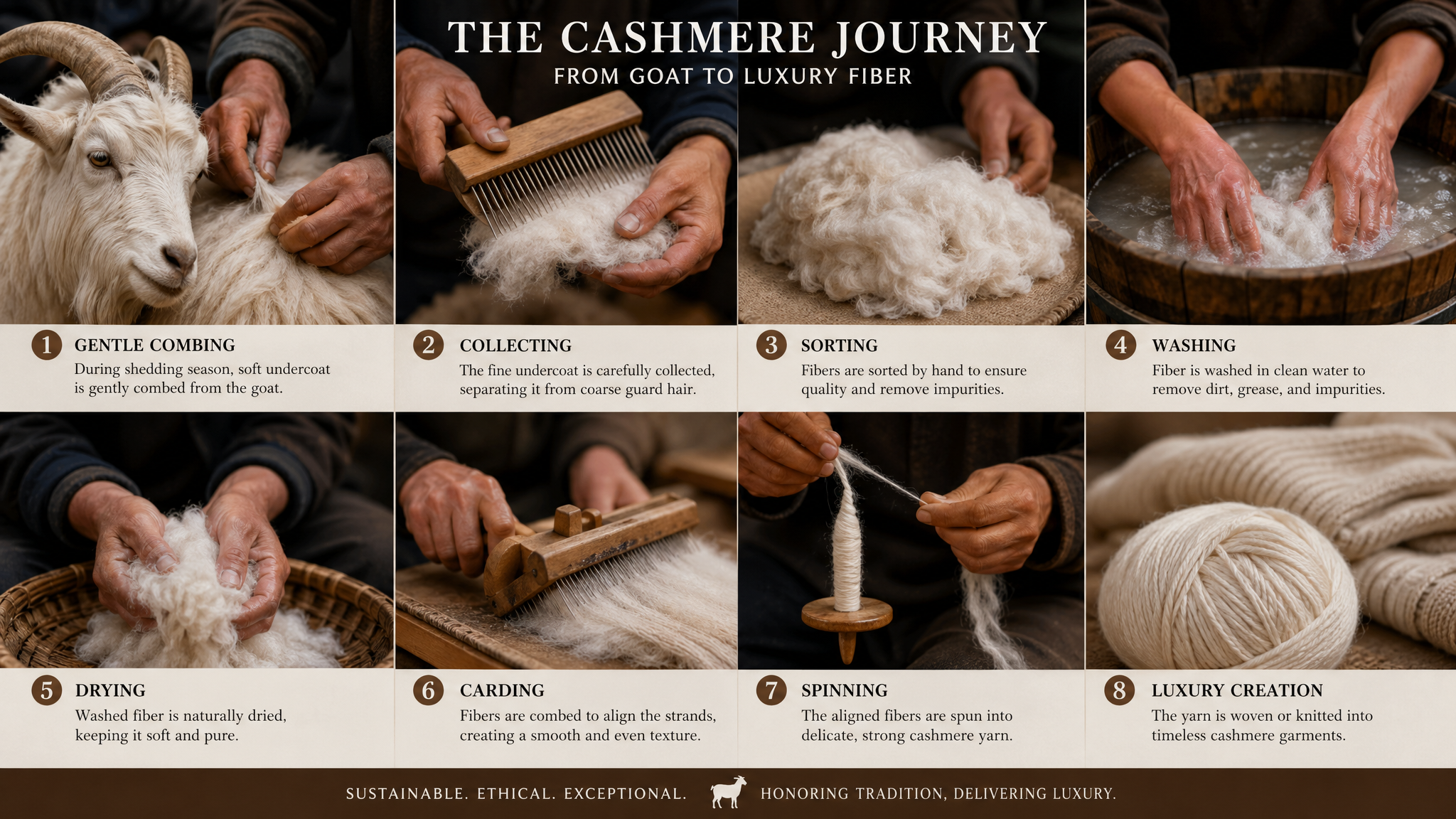
The story begins not in the weaving sheds of Srinagar but on the high plateaus of Ladakh, where the nomadic Changpa people have herded the Changthangi goat for over a thousand years. Their intimate knowledge of these animals — which pastures to use in which season, how to hand-comb without causing stress, how to sort fibre by touch alone — is a living heritage as precious as the fibre itself.

"The shawls of Kashmir are things of wonder. A single piece may contain more than a million knots and take four craftsmen three years to complete — yet when folded, it passes through a finger ring."

— Moorcroftand Trebeck, Travels in the Himalayan Provinces of Hindustan, 1841
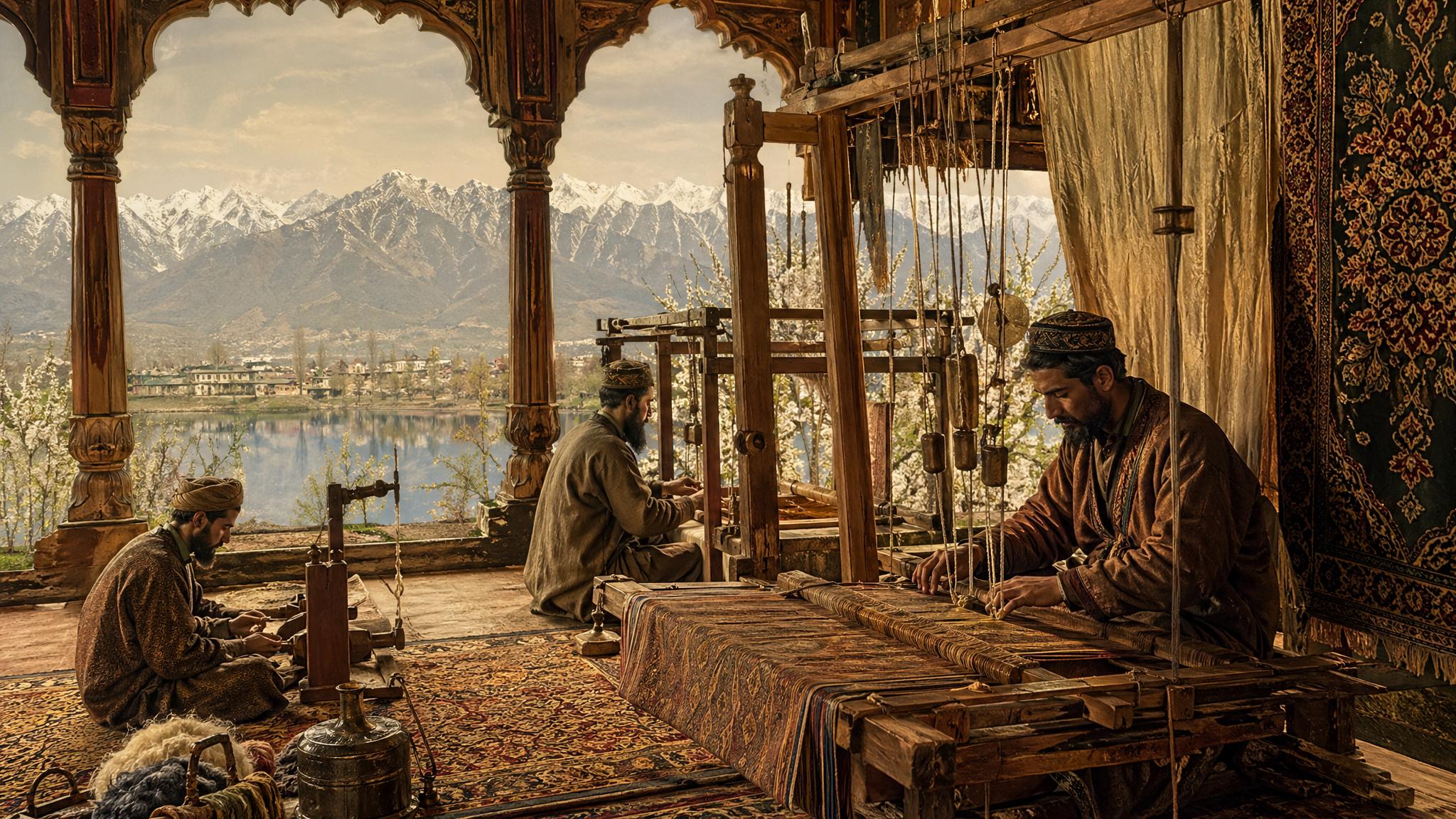
Traditional Kashmiri weavers working on handloom in the Kashmir Valley with mountains visible in background
Kashmir Valley weavers at a traditional pit loom — a practice unchanged for centuries
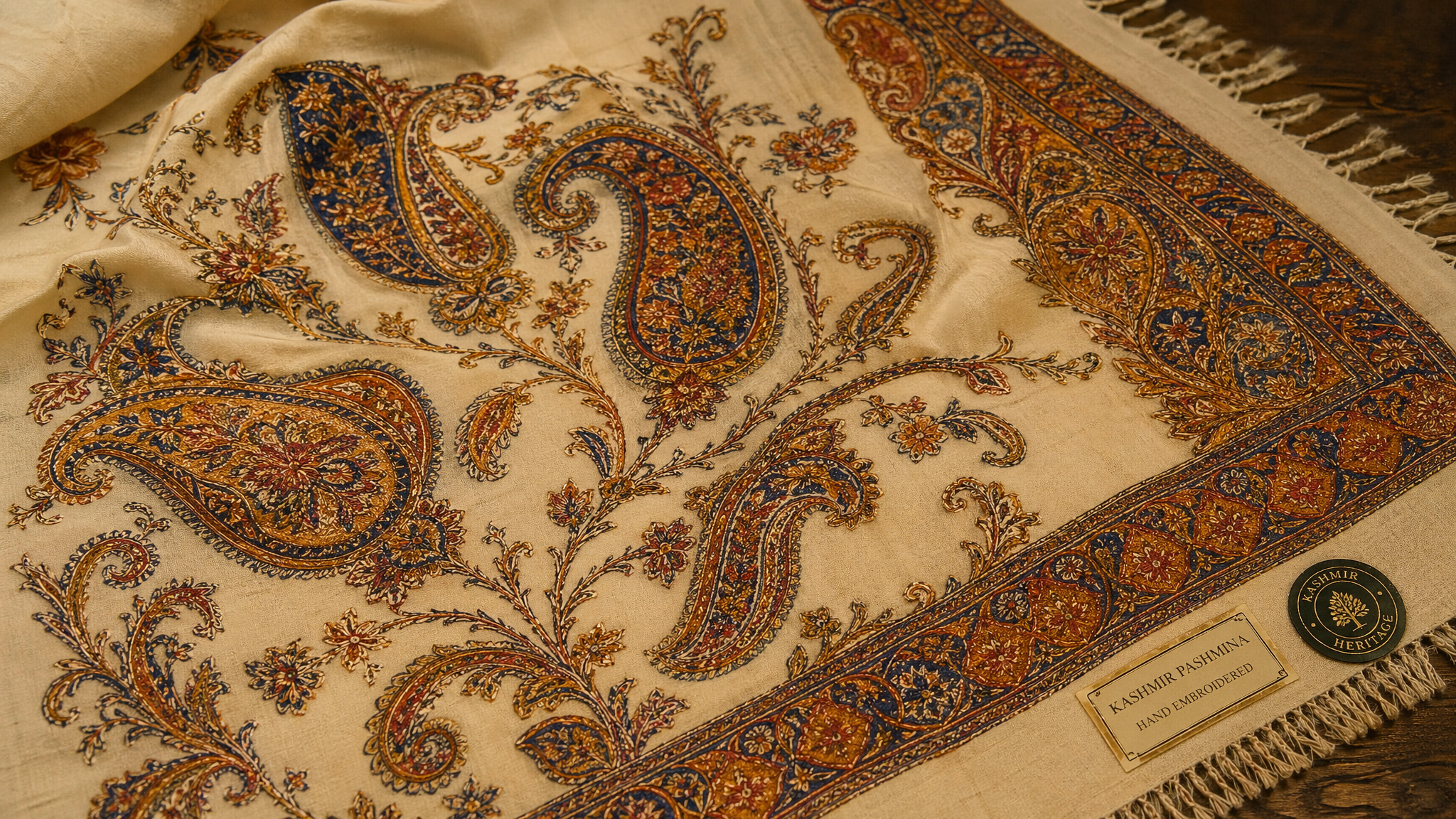
Intricate Kashmiri Pashmina shawl with elaborate paisley embroidery in saffron and indigo
An authentic Kashmiri Pashmina shawl with sozni embroidery — each piece a lifetime achievement
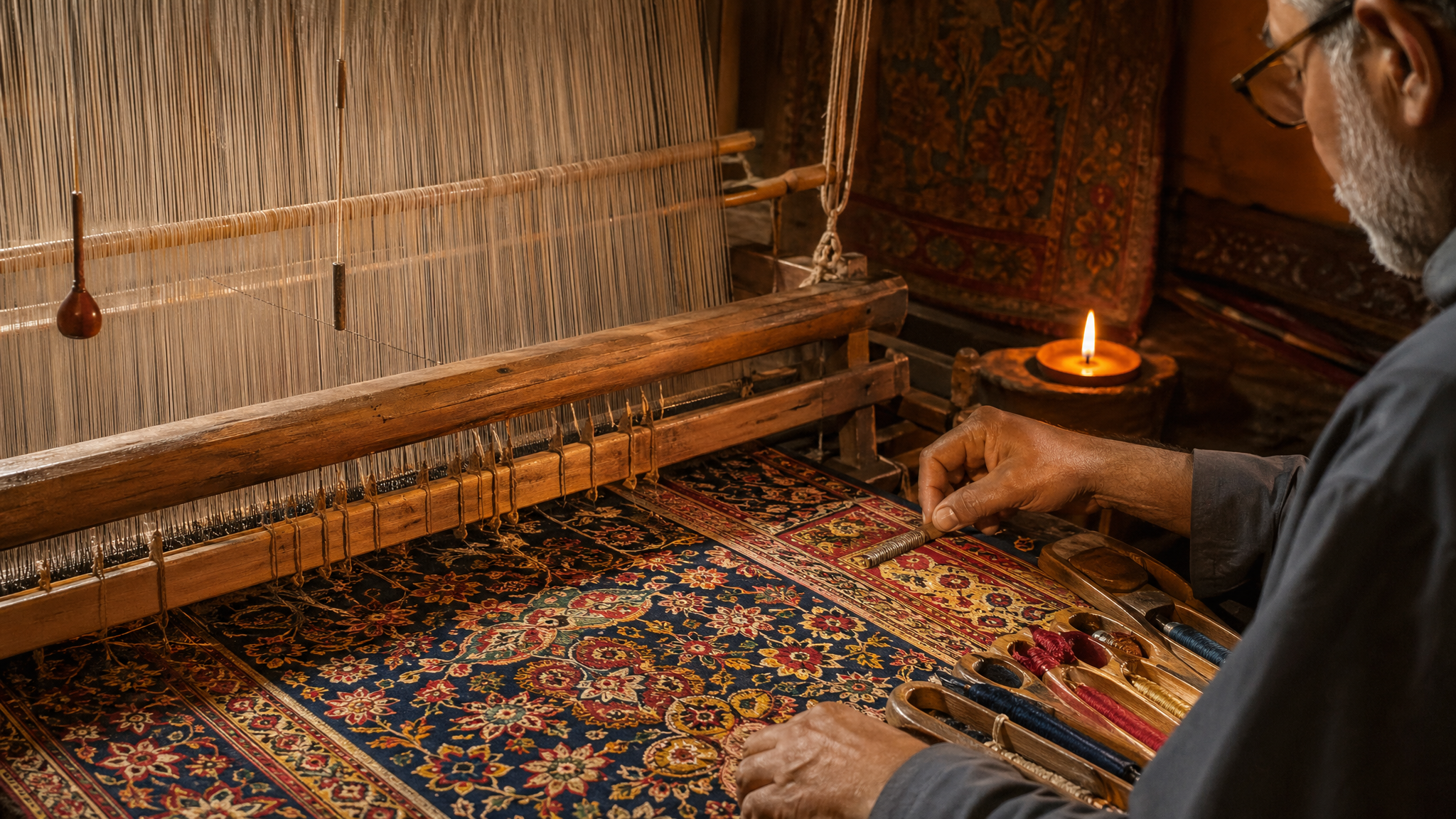
Close-up of Kani weaving technique on wooden loom with intricate multi-coloured thread patterns
Kani weaving — each colour change requires a separate wooden spool (kani), hence the name
A Living Timeline

Five Centuries of Cashmere Heritage

15th Century — c.1420

Sultan Zain-ul-Abidin Founds the Craft

The "Budshah" (Great King) of Kashmir is credited with establishing formal weaving workshops in Srinagar and bringing skilled weavers from Persia and Central Asia. He introduced the sophisticated kani technique — using wooden spools to create complex multi-coloured patterns — transforming raw Pashm into an art form. The Kashmiri shawl industry was born.

16th–17th Century — Mughal Era

The Mughals Elevate Cashmere to Imperial Status

Emperor Akbar (r. 1556–1605) became a devoted patron of Kashmiri shawls, reportedly owning hundreds. He commissioned the famous do-shala (pair of identical shawls woven simultaneously) and gifted them to nobles as marks of highest honour. Jahangir called them "the ring-shawls" — so fine they could pass through a ring. The Mughal court's patronage transformed Kashmir into the world's most important luxury textile centre.

18th Century — European Discovery

Cashmere Conquers Europe

European traders — first the French, then the British — began importing Kashmiri shawls via the East India Company. By the 1780s, Kashmiri shawls were the most desirable luxury item in European high society. Napoleon's gift of a Kashmiri shawl to Joséphine Bonaparte sparked a continent-wide obsession. European demand exceeded what Kashmir could supply — leading to the birth of imitation "Paisley" shawls in Scotland.

19th Century — Peak & Disruption

The Golden Age and Its End

By the 1820s, over 40,000 Kashmiri weavers were employed in the shawl industry. Then came the Sikh invasion (1819), devastating famines, and the catastrophic collapse of demand when the fashion for large shawls faded in the 1870s. The industry that had employed an entire civilisation virtually disappeared within a generation. Thousands of master weavers lost their livelihoods, and many of the most complex techniques were nearly lost.

20th Century — Revival

Industrial Production & Heritage Revival

The post-independence era saw two simultaneous developments: the rise of industrial cashmere production (Scotland, Italy, later China and Mongolia) supplying mass-market sweaters, and a growing movement to preserve authentic Kashmiri handloom traditions. The Crafts Development Institute Srinagar and the J&K Handloom Development Corporation were established to document and revive traditional techniques.

2005–Present — GI Protection

Geographical Indication & Digital Heritage

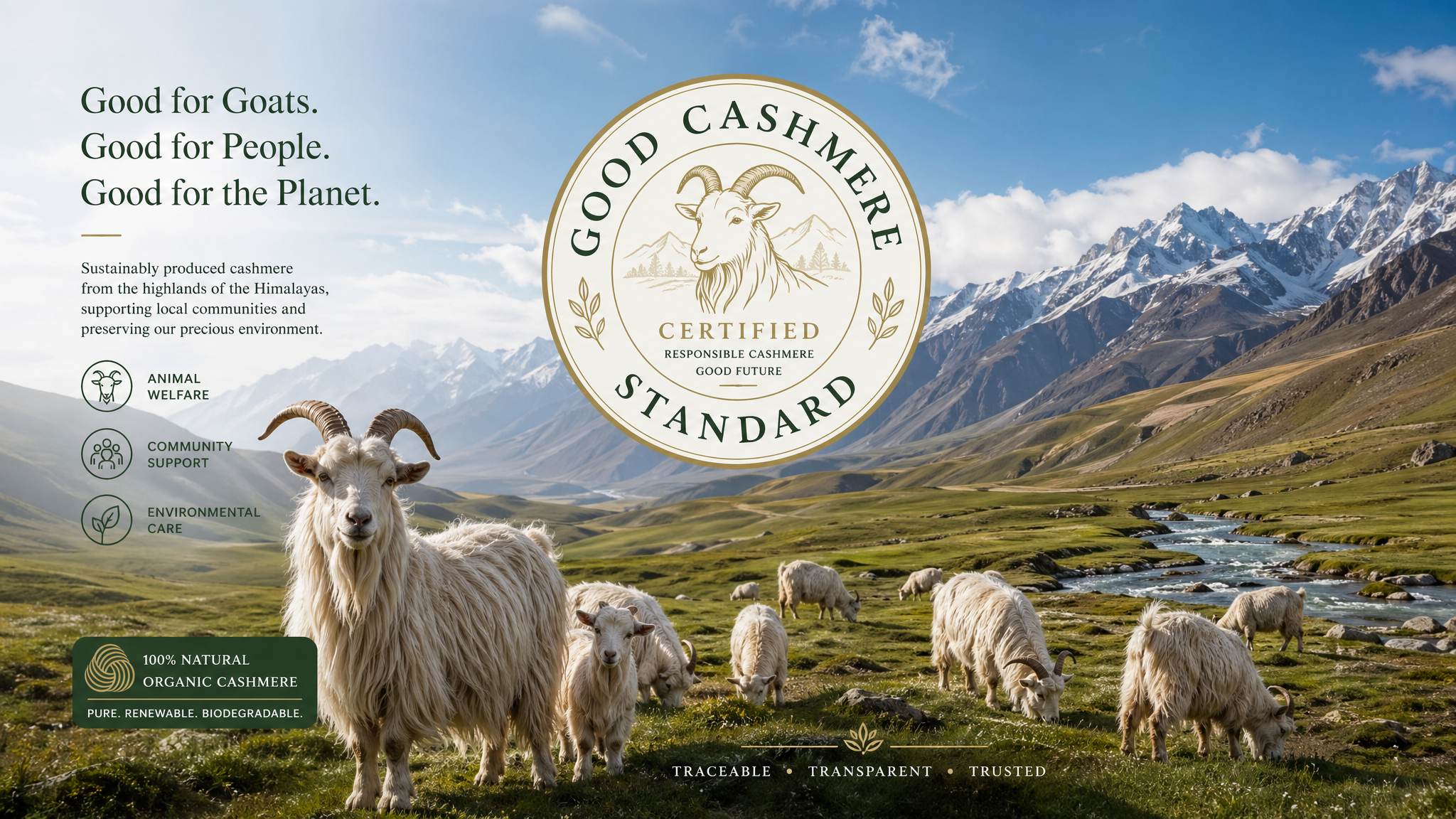
In 2008, the Geographical Indication (GI) tag was granted to "Kashmiri Pashmina" — legally protecting the name and requiring authentic products to bear the GI mark. In 2022, the GI was extended with the "Pashmina Mark" logo for consumer protection. Today, blockchain traceability initiatives and platforms like "Kashmir Origin" are helping connect global consumers directly with Changpa herders and Kashmiri weavers.

The Crown Jewel

Pashmina: Art Form of the Ages

Pashmina is not just a type of fabric — it is one of humanity's greatest craft traditions, combining the world's finest natural fibre with techniques requiring decades to master.

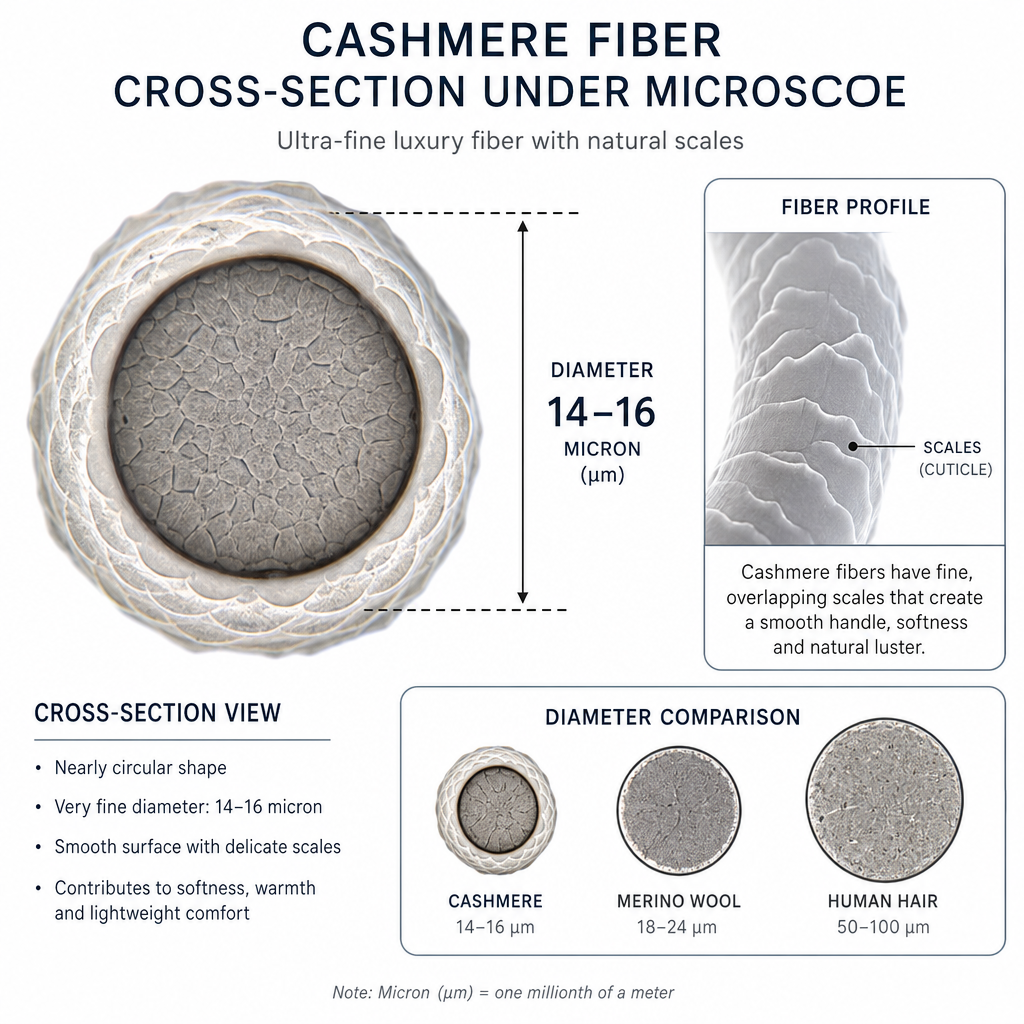
The word pashmina derives from the Persian pashm, meaning "soft gold." In its strictest definition, Pashmina refers to textiles woven from the ultra-fine undercoat (12–16 microns) of the Changthangi goat in the traditional handloom workshops of the Kashmir Valley.

What makes authentic Pashmina extraordinary is not just the raw material but the accumulated knowledge of weavers who understand the fibre's behaviour at every stage — how to card without breaking the delicate staple, how to spin a yarn so fine it would snap if spun on a powered machine, how to create patterns of infinite complexity using nothing but wooden spools and the weaver's memory.

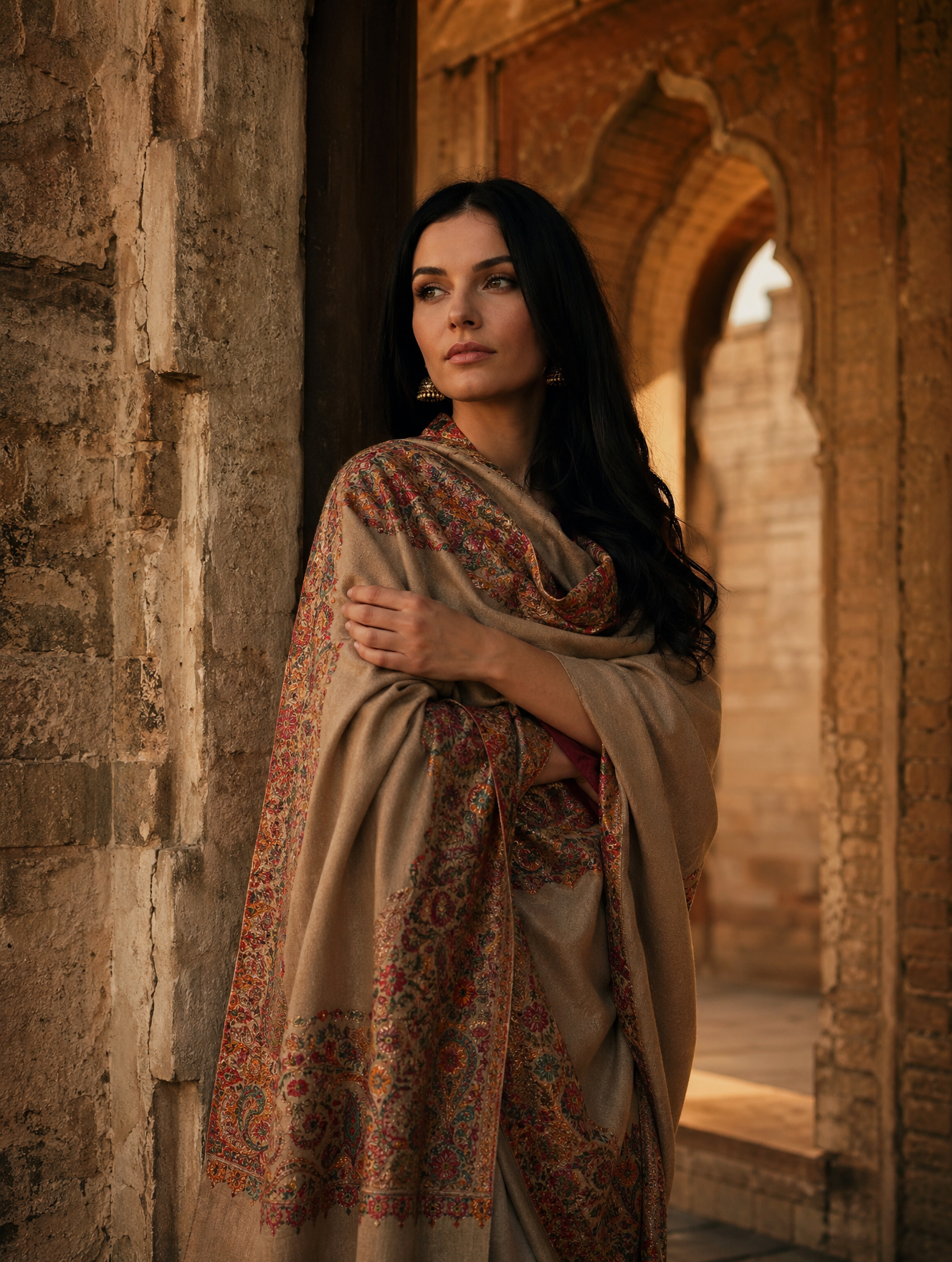
Elegantly dressed woman wearing a traditional embroidered Kashmiri Pashmina shawl against a stone archway
Living Traditions

The Four Great Kashmiri Weaving Arts

Each technique represents a distinct tradition requiring years of apprenticeship and a lifetime of refinement.

🪵

Kani Weaving

The most technically demanding technique. Small wooden sticks (kanis) carry individual colour threads, allowing the weaver to create complex patterns without the use of a shuttle. A single kani shawl can require 100–300 kanis working simultaneously. Production time: 2–5 years per piece. A genuine kani shawl can cost ₹5–50 lakh ($6,000–$60,000) and is considered an heirloom investment.

🧵

Sozni Embroidery

Fine needle embroidery using silk or cashmere thread on woven Pashmina. Sozni patterns traditionally depict Kashmiri flora — chinar leaves, lotus, almond blossom — rendered with extraordinary delicacy. A master sozni artisan can spend 18 months embroidering a single shawl. The stitch is executed from the reverse side, requiring the craftsperson to visualise the pattern in mirror image.

🖌️

Papier-Mâché & Printing

Wooden block printing (calico printing) on Pashmina using natural mineral dyes. Traditional blocks are carved from walnut or pear wood and can hold detail at 0.5mm precision. Natural dyes — saffron, indigo, pomegranate rind, walnut shells — require complex mordanting processes and produce colours that deepen and mellow with age in ways synthetic dyes cannot replicate.

🔗

Raffel (Loom Embroidery)

A faster loom-based technique producing a woven-in pattern during weaving (not post-weave embroidery). Raffel shawls are more affordable than kani pieces but still represent considerable skill. The pattern is controlled by punch-cards or, in traditional workshops, by a pattern-caller who recites the weaving sequence from memory — a practise directly analogous to early computer programming.

Global Spread

How Cashmere Conquered the World

From a single valley in the Himalayas, cashmere became the defining luxury of modern fashion.

France & Europe — 1800s

The Paisley Revolution

European demand for Kashmiri shawls so far outstripped supply that Scottish, French and Austrian manufacturers developed imitation "Paisley" patterns (named after the Scottish town) woven from wool. These imitations were fine products in their own right, but bore no relation to the authentic Kashmiri Pashmina — a confusion that persists today.

Scotland — 1850s–Present

The Scottish Cashmere Industry

Scotland became the first country outside Asia to establish industrial cashmere manufacturing, sourcing raw fibre from China and Mongolia while applying Scottish spinning and weaving expertise. Brands like Pringle (est. 1815) and Johnstons of Elgin (est. 1797) defined the modern cashmere sweater. Scotland still produces some of the world's most technically accomplished cashmere knitwear.

Italy — 1900s–Present

Italian Excellence in Finishing

Italian manufacturers — particularly in the Biella region — became global leaders in luxury cashmere finishing. The Italian approach prioritised softness and drape achieved through controlled wet-finishing processes. Brands like Loro Piana (founded 1924) sourced the finest Mongolian and Ladakhi fibre and combined it with Italian textile expertise to create what many regard as the benchmark for modern luxury cashmere.

China & Mongolia — 1980s–Present

The Volume Revolution

China became the world's dominant cashmere producer and exporter from the 1980s, supplying both raw fibre and finished goods. Inner Mongolia accounts for roughly 70% of global raw cashmere output. The resulting democratisation of cashmere — sweaters sold for $30 at fast-fashion retailers — brought questions of quality, adulteration, and sustainability that the industry is still wrestling with.

The Heritage Under Threat

Today, the traditions that produced some of humanity's most exquisite textiles face an existential crisis — not from a single cause, but from a convergence of economic, social and environmental pressures.

The Artisan Exodus

The average age of master kani weavers in Kashmir is now over 55. Younger generations, facing uncertain incomes and preferring urban employment, are not entering the craft in sufficient numbers. UNESCO has classified several Kashmiri textile techniques as endangered intangible cultural heritage. Without systematic intervention — better wages, design innovation, market access — entire knowledge systems may disappear within a generation.

The Imitation Problem

The Pashmina GI tag has been legally available since 2008, yet studies by the Craft Development Institute (CDI) Srinagar estimate that over 70% of products sold as "Pashmina" globally do not meet the criteria. Viscose, acrylic, and machine-woven imitations are openly sold in tourist markets worldwide. The economic damage to genuine Kashmiri artisans is immeasurable.

The Digital Opportunity

Against these challenges, a new generation of initiatives is creating direct connections between artisans and conscious consumers. Blockchain-verified certificates of authenticity, QR-coded GI tags, direct-to-consumer e-commerce platforms, and storytelling campaigns are all helping authentic Kashmiri products command the premium they deserve. For the first time in decades, there is genuine reason for cautious optimism about the future of Kashmiri heritage crafts.

Continue Learning

See How Cashmere is Made Today

From Changtang plateau to spinning mill — explore the full production journey.

Explore Production →