The Science

What is Cashmere?

Origins, fiber science, micron measurements, and how cashmere compares to wool, Pashmina and other luxury fibres.

⏱ 8 min read

Defining Cashmere: More Than Just "Soft Wool"

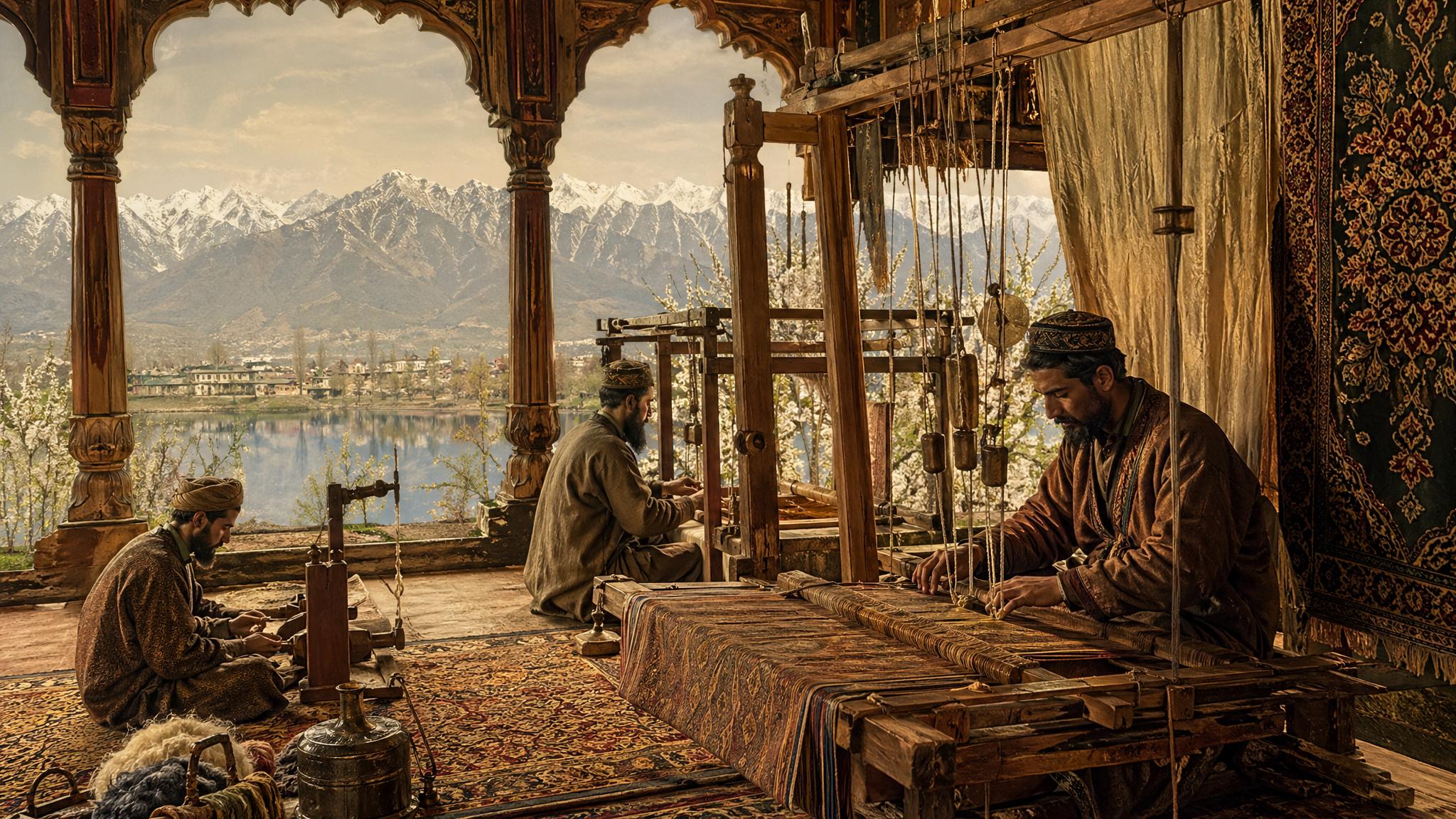
Cashmere is a natural fibre obtained from the fine undercoat — known as pashm or pashmina — of the Cashmere goat (Capra hircus laniger). The name derives directly from the historical spelling of "Kashmir," the Himalayan valley where the craft of weaving this fibre was first perfected.

Unlike sheep's wool, which comes from a single animal population, cashmere goats are adapted to extreme cold environments across the Himalayan plateau, the Gobi Desert, and parts of Central Asia. To survive winters where temperatures plunge to −40°C, these animals develop a uniquely fine inner coat — the cashmere — beneath a coarser outer guard-hair layer.

Cashmere is formally defined under international textile standards (ISO 3715 and the US Wool Products Labeling Act) as fibre with a diameter no greater than 19 microns, with no more than 3% coarse fibres exceeding 30 microns. This standard is what legally distinguishes cashmere from ordinary goat-hair or "wool."

📏 The Micron Standard

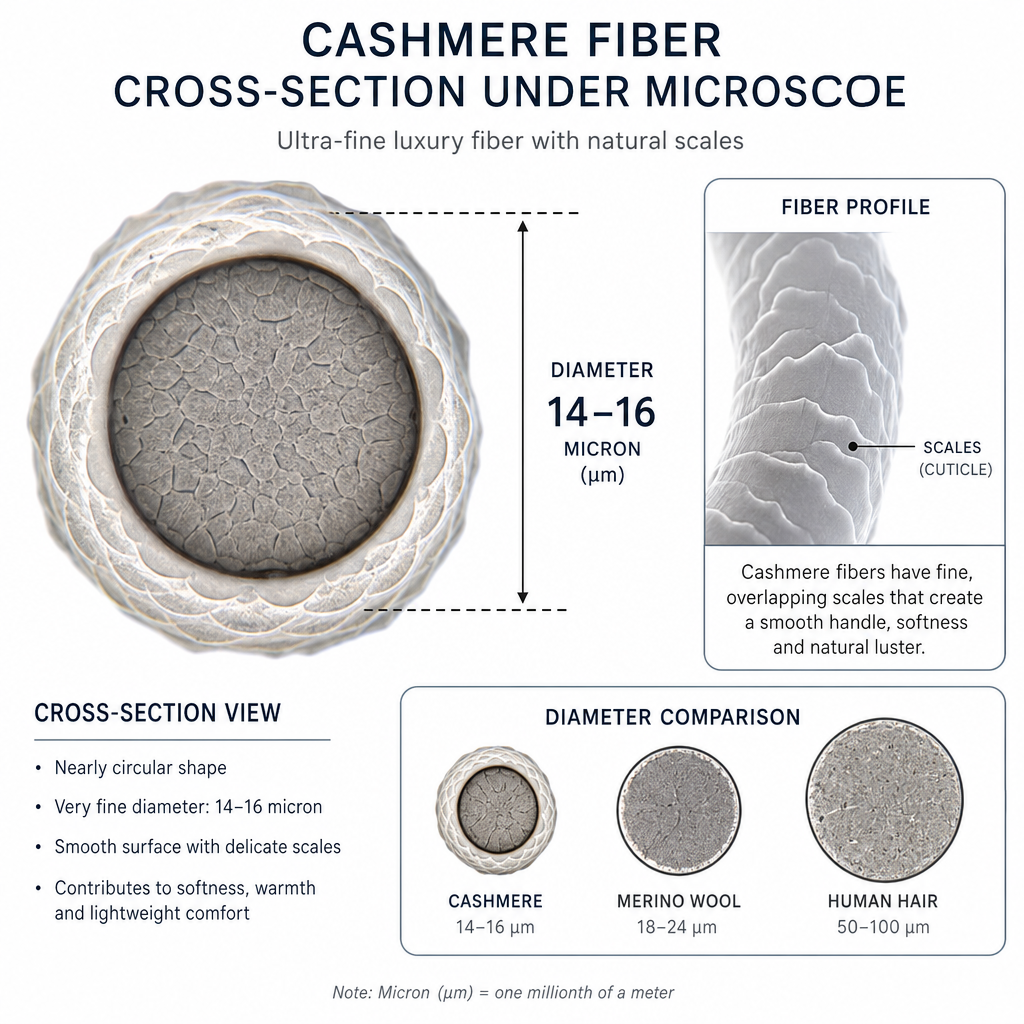
A micron (µm) is one-millionth of a metre. A human hair is approximately 70–80 microns in diameter. The finest cashmere fibres measure just 14–15.5 microns — roughly one-fifth the thickness of a human hair.

Cashmere in detail

Cashmere fiber cross-section viewed under electron microscope showing 14–16 micron diameter
Cashmere fibre under electron microscope — ~14–16 µm diameter
Woman closely examining fine cashmere fabric swatches on a white table
Tactile evaluation remains an important quality check for experienced buyers
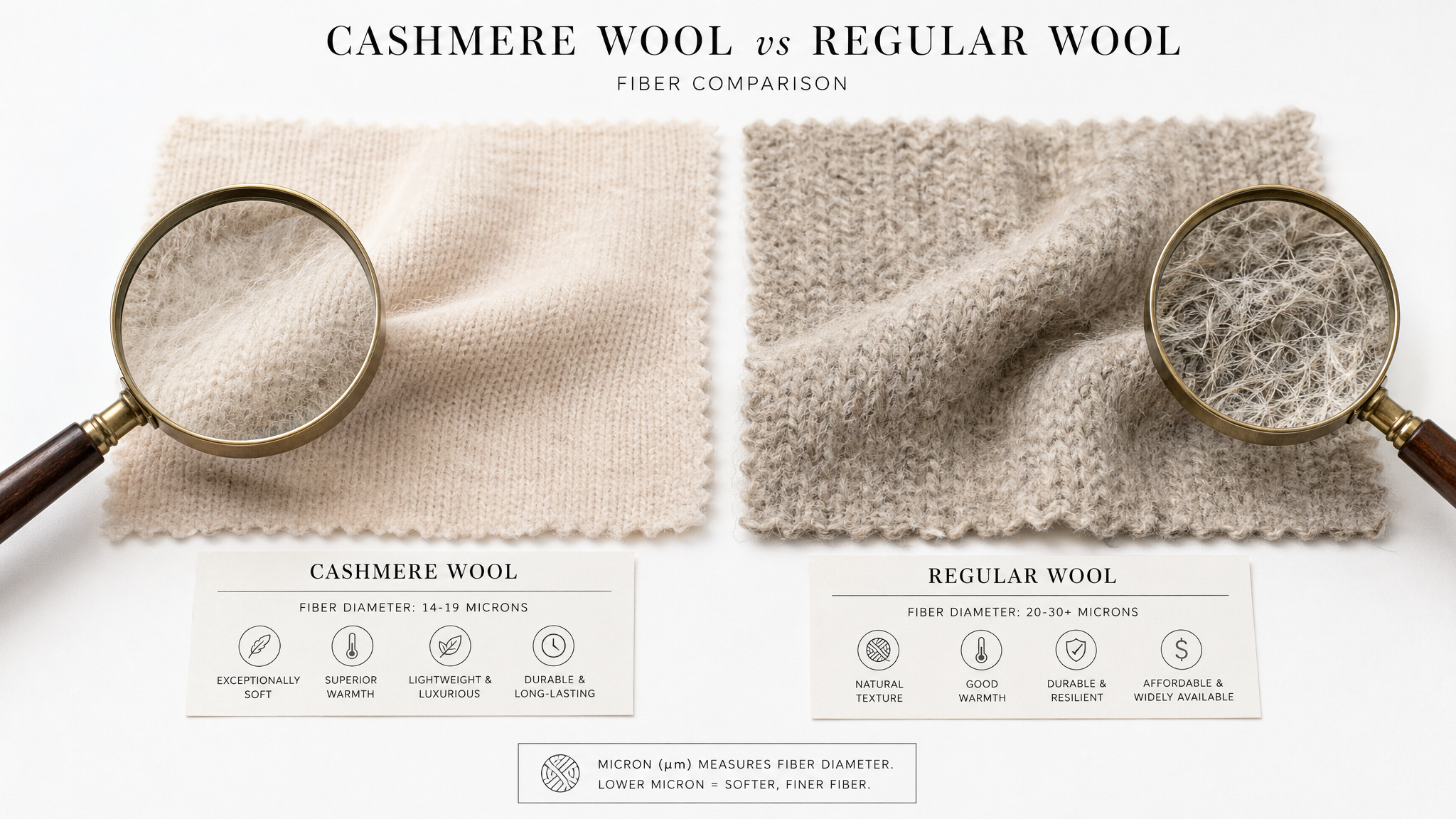
Side-by-side comparison of cashmere and regular wool fabric swatches with magnifying glass
Cashmere (left) vs. standard merino wool (right) — visible texture difference

Fiber Science: The Three Key Properties

The extraordinary qualities of cashmere are the result of three interlocking physical properties: diameter, length, and crimp. Understanding these helps explain why cashmere commands such a premium — and why cheap imitations fail to replicate its feel.

🔬
14–19 µm
Diameter
Determines softness. Below 15.5 µm = ultra-fine luxury grade. Above 19 µm cannot be labelled cashmere.
📏
34–38 mm
Staple Length
Longer fibres produce stronger, less pilling yarn. Ideal for sweaters and fine knits requiring durability.
〰️
~35/cm
Crimp Frequency
Natural waves trap air, creating insulating loft. More crimp = warmer, fluffier handle. Less crimp = smoother, denser drape.

Why Diameter Matters Most

The relationship between fibre diameter and softness is not linear — it is exponential. At 19 microns, a fibre sits at the threshold of perceivable irritation for most people. At 16 microns, the fibre is below the itch threshold for virtually everyone. At 14 microns — the finest recorded — the sensation is compared to a second skin.

This is why the Changthangi goat of Ladakh is so prized: raised at 4,500+ metres altitude in extreme cold, its fibres have evolved to be among the finest cashmere in the world, averaging 14–16 microns — finer than most Mongolian cashmere (17–18.5 µm) or Chinese cashmere (15–17 µm).

Visual Comparison

How Cashmere Compares

Average fibre diameter across major natural fibres — lower is finer and softer.

Vicuña
12.5 µm
12.5 µm
Ladakhi Pashmina
14–16 µm
14–16 µm
Grade A Cashmere
15.5 µm
15.5 µm
Grade B Cashmere
16–17 µm
16–17 µm
Fine Merino Wool
17–19 µm
17–19 µm
Grade C Cashmere
18–19 µm
18–19 µm
Standard Merino
21–24 µm
21–24 µm
Standard Wool
28–35 µm
28–35 µm

Bars are proportional to fibre diameter. Finer = more to the left. Sources: IWTO, GCS, Kashmir Handloom Board.

Cashmere Grades: A, B, and C Explained

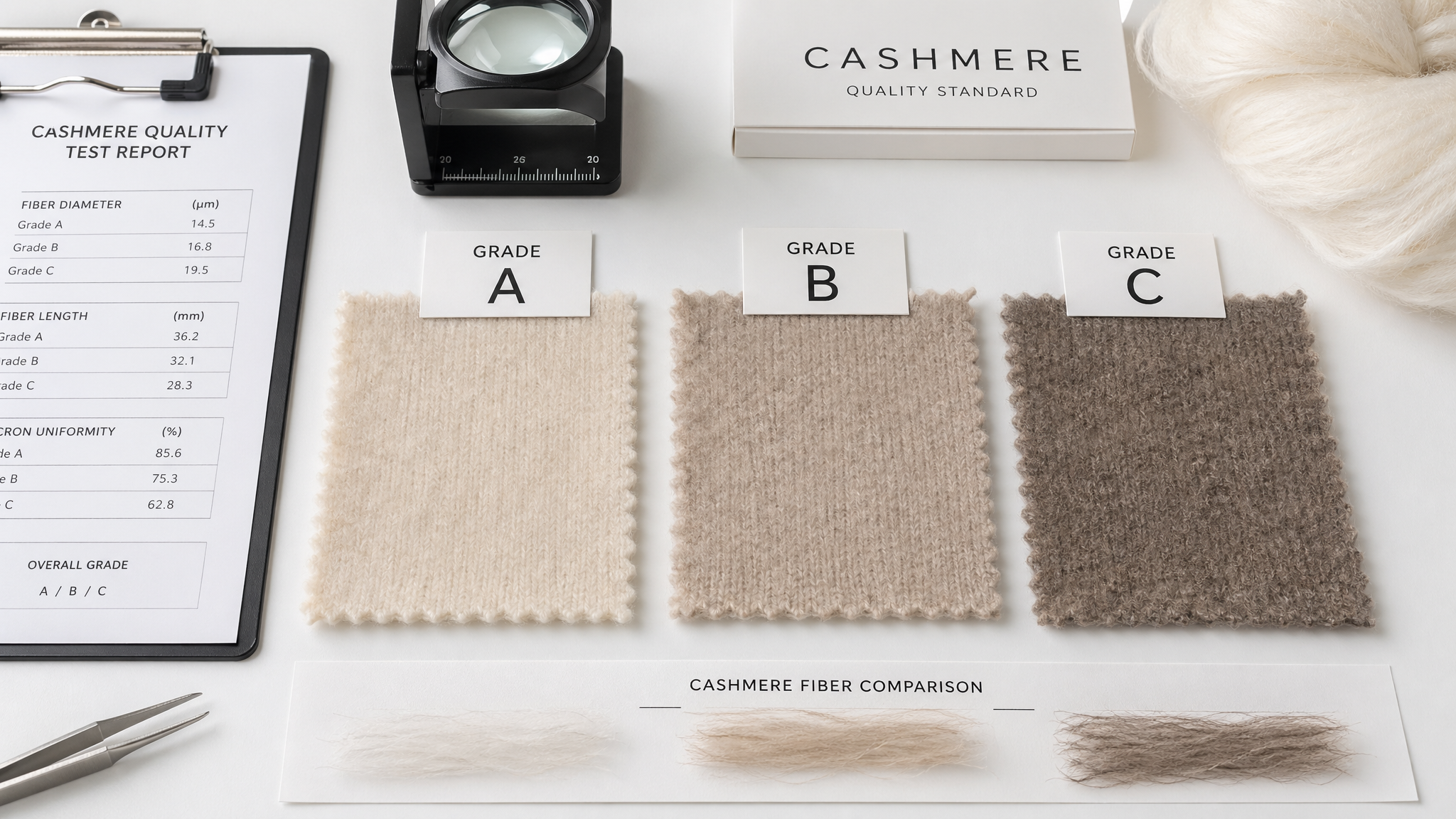
The cashmere industry broadly uses three grade designations based primarily on fibre diameter and staple length. While there is no single global grading body, these categories are widely recognised by manufacturers, retailers, and standards organisations.

A
Grade A — Premium
🔬 Diameter: ≤15.5 microns
📏 Staple Length: ≥36 mm
🏷️ Purity: <1% coarse fibre

The finest and softest grade. Sourced primarily from the neck and belly region of the goat. Ultra-luxurious handle, virtually no itch, and exceptional drape. Used in top-tier fashion brands and Pashmina shawls.

B
Grade B — Fine
🔬 Diameter: 15.5–17 microns
📏 Staple Length: 32–36 mm
🏷️ Purity: <3% coarse fibre

Excellent quality cashmere used in most premium retail products. Soft, warm, and durable. Represents the best value proposition for most consumers — quality without the ultra-premium price point.

C
Grade C — Standard
🔬 Diameter: 17–19 microns
📏 Staple Length: 28–34 mm
🏷️ Purity: ≤3% coarse fibre

Still genuine cashmere, and warmer than regular wool, but may feel slightly coarser to sensitive skin. Often used in blended garments, casual knitwear, and mid-range accessories. Prone to more pilling over time.

Know the Difference

Cashmere vs Wool vs Pashmina

Three terms often confused — here's what each actually means and how they differ.

Property Cashmere Pashmina Merino Wool Standard Wool
Source Animal Cashmere Goat Changthangi Goat (specific breed) Merino Sheep Various Sheep Breeds
Fibre Diameter 14–19 µm 12–16 µm (subset of cashmere) 17–24 µm 28–40 µm
Harvest Method Hand-combed (undercoat) Hand-combed (finest undercoat) Shearing Shearing
Annual Yield/Animal 100–200g 80–120g 4–8 kg 2–10 kg
Warmth-to-Weight ★★★★★ Exceptional ★★★★★ Exceptional ★★★★ Very Good ★★★ Good
Softness ★★★★★ Ultra-soft ★★★★★ Ultra-soft ★★★★ Very soft ★★ Can be scratchy
Typical Price (sweater) $150–$800+ $300–$2,000+ (handwoven) $80–$250 $30–$100
Legal Standard ISO 3715 / WPLA GI Tag (India), no single global std IWTO standards IWTO standards
"Pashmina is cashmere — but not all cashmere is Pashmina. Genuine Pashmina is an ultra-fine subset (≤16 µm) sourced specifically from the Changthangi goat of Ladakh and the Kashmir Valley."
— Kashmir Handloom Development Corporation
The Source

The Changthangi Goat of Ladakh

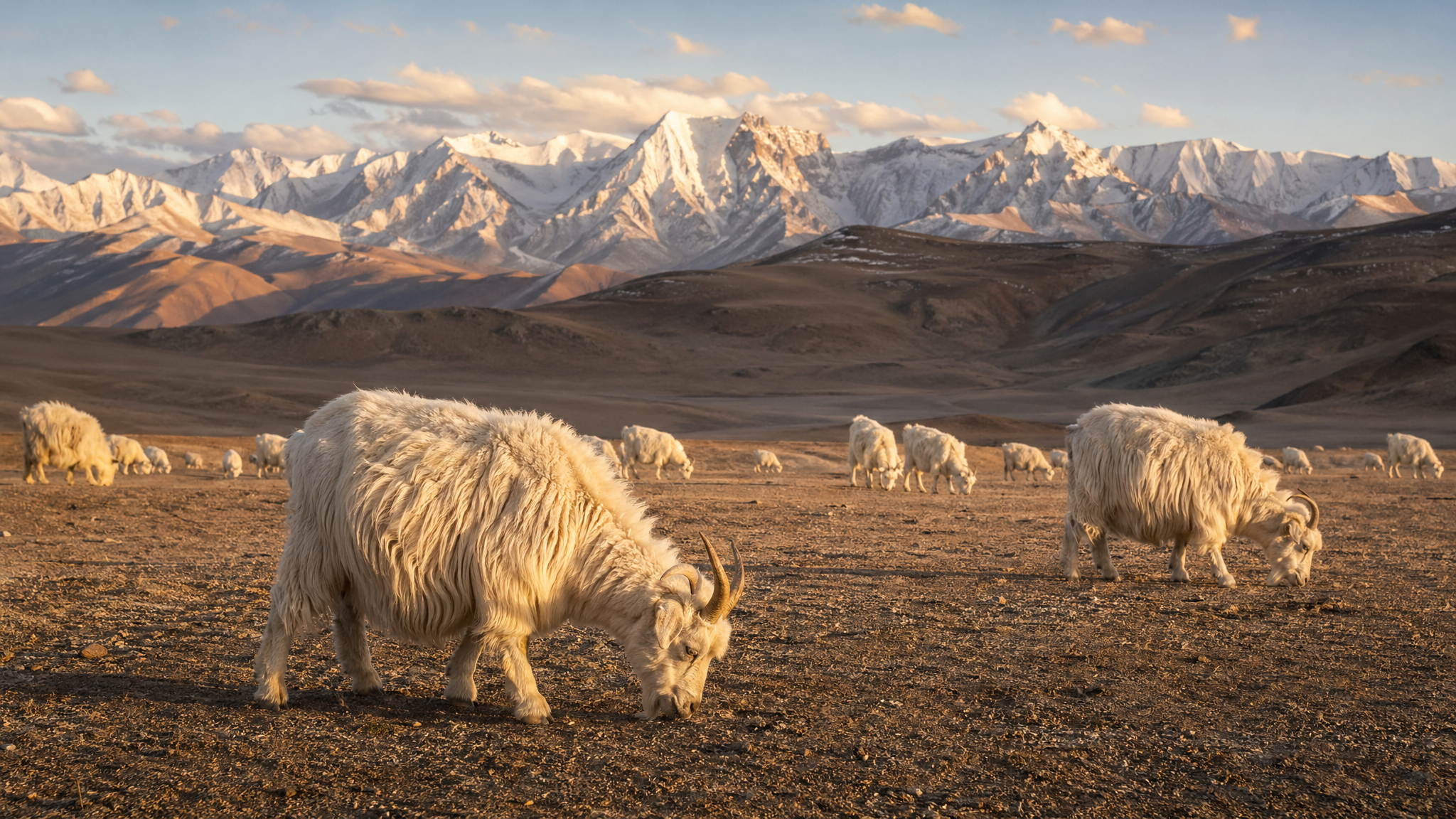
Raised by nomadic Changpa herders on the Changtang plateau at altitudes exceeding 4,500 metres, the Changthangi goat (Capra hircus) is the original source of true Pashmina cashmere.

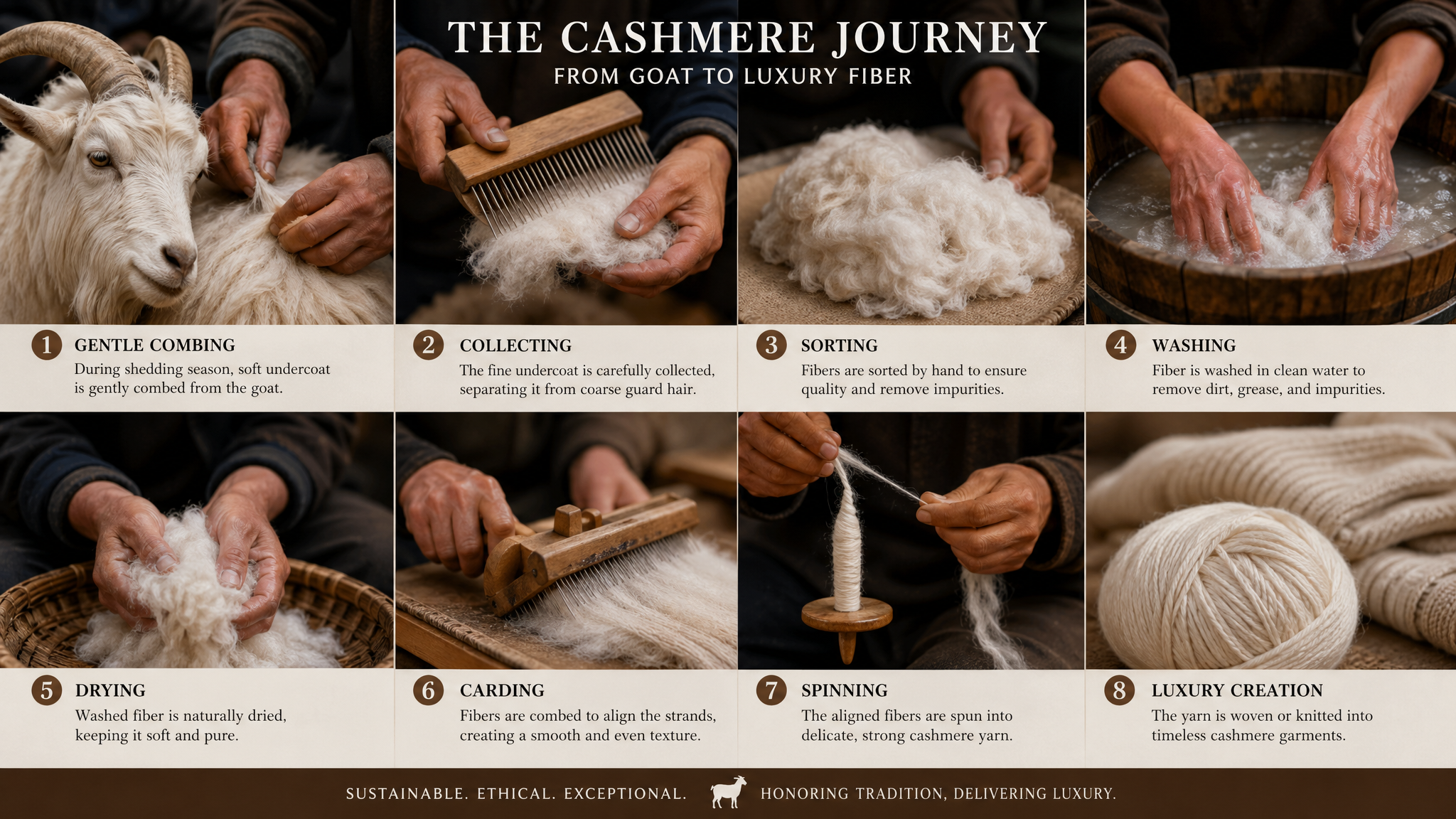
These animals face temperatures as low as −40°C in winter. Their survival strategy is a two-layer coat: a coarse outer guard-hair providing wind protection, and an incredibly fine inner pashm layer that provides thermal insulation. It is this inner layer — and only this — that is harvested for Pashmina.

Each goat yields just 80–120g of usable pashm per year (after dehairing). A single Pashmina shawl requires the annual yield of three to five animals — explaining why authentic Pashmina remains one of the world's most expensive natural textiles.

Explore Ladakhi Heritage →
Changthangi cashmere goats grazing on the high Himalayan plateau in Ladakh at golden hour with snow-capped mountains behind
Test Yourself

Quick Fiber Quiz

Five questions to test what you've just learned about cashmere fiber science.

Loading quiz…

Take the Full 10-Question Quiz →

Next Step

Discover 500 Years of Kashmiri Heritage

From Mughal courts to modern runways — the extraordinary history of the world's finest fibre.

Explore History & Heritage →