The Honest Truth About Cashmere's Environmental Footprint
Cashmere has a complicated sustainability story — not because it is inherently destructive, but because the dramatic scaling-up of industrial production over the past 30 years has outpaced the land's capacity to support it.
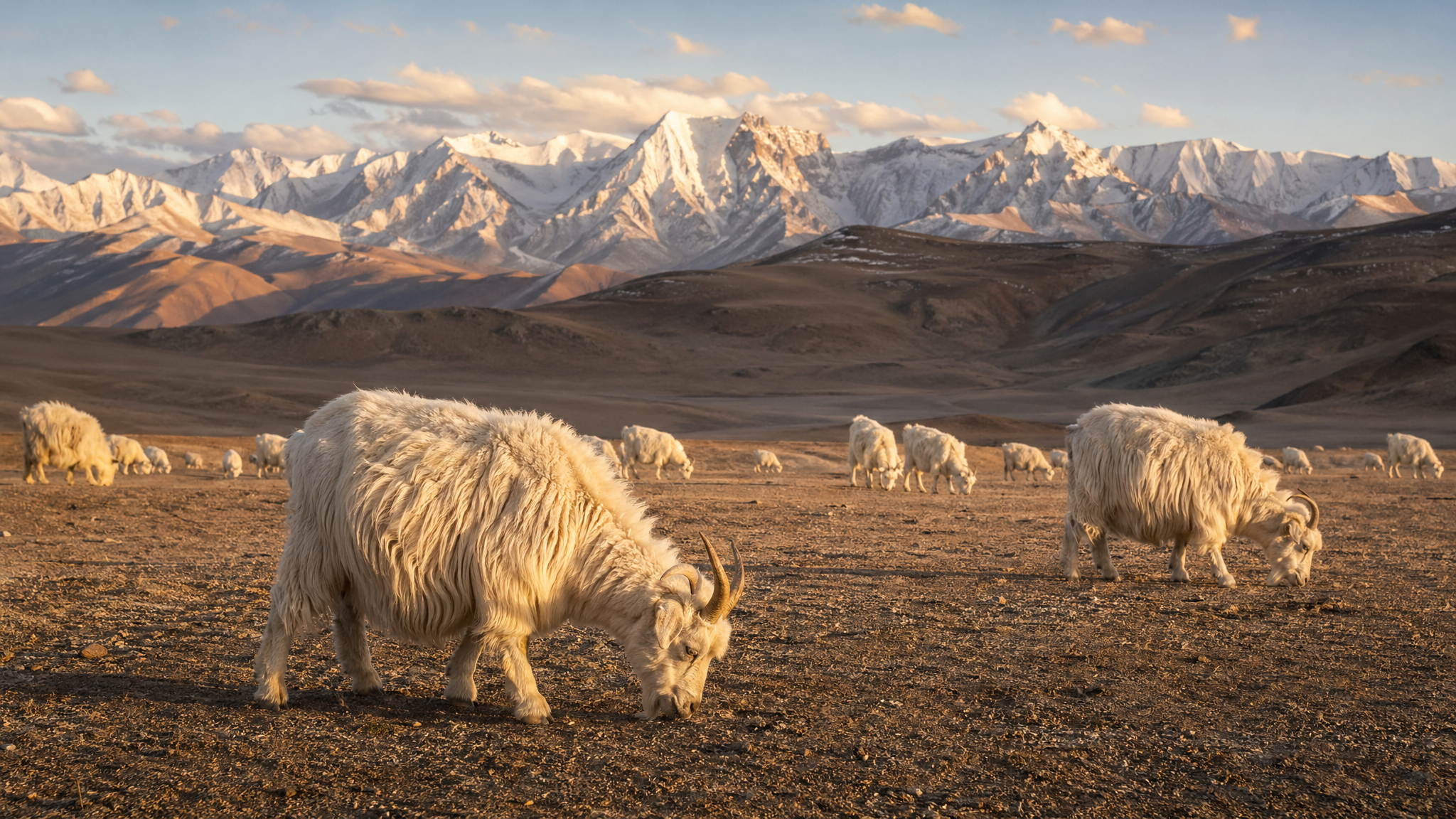
In its traditional form — practised by the Changpa nomads of Ladakh and their equivalents across the Himalayan plateau — cashmere production has been sustainable for over a millennium. Low-density herding, seasonal rotation of pastures, and generations of accumulated ecological knowledge kept both the animals and their environment in balance.
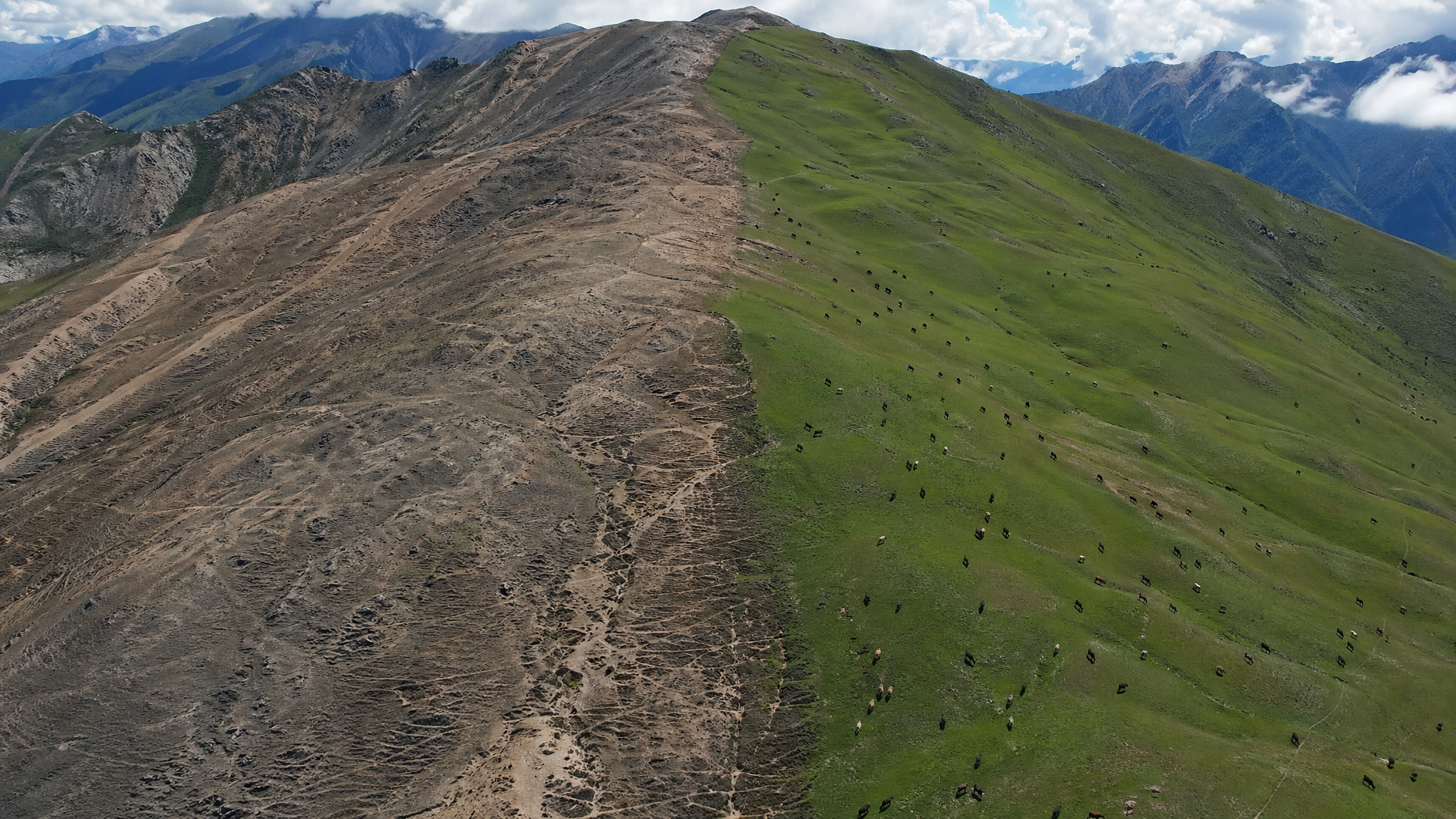
The problem emerged when global fast-fashion demand — driven by retailers selling "$20 cashmere" products — created economic incentives to dramatically increase herd sizes. Between 1990 and 2016, Mongolia's goat population grew from 5 million to over 27 million. The consequences have been devastating: approximately 70% of Mongolia's grasslands show signs of degradation, and the average fibre diameter of Mongolian cashmere has measurably increased as animals receive inadequate nutrition on overgrazed land.
🌍 The Key Insight
The sustainability problem in cashmere is not the fibre itself — it is the price pressure from fast fashion that incentivises volume over quality. Buying genuine, certified, high-quality cashmere is, paradoxically, the more sustainable choice: one well-made $200 sweater that lasts 20 years generates far less environmental impact than five $40 sweaters that last two years each.
The Ladakhi Exception
The Changtang plateau of Ladakh represents a notably different picture. Traditional Changpa herding practises — involving seasonal movement between summer and winter pastures, small herd sizes, and a deep cultural relationship with the land — have kept the ecosystem relatively intact. Goat densities remain far lower than in Mongolia, fibre quality remains higher, and the land shows fewer signs of degradation.
Climate change, however, poses new threats: erratic snowfall patterns, increased temperatures, and reduced pasture productivity are beginning to stress even these traditionally managed landscapes. The Changpa community faces both environmental and economic pressures that require thoughtful, externally supported solutions.