

Make It Last a Lifetime

Cashmere Care & Maintenance

Properly cared for, cashmere improves with age and can last 30+ years. Our complete guide covers washing, drying, storage, pilling, and repair — everything you need to know.

⏱ 9 min read
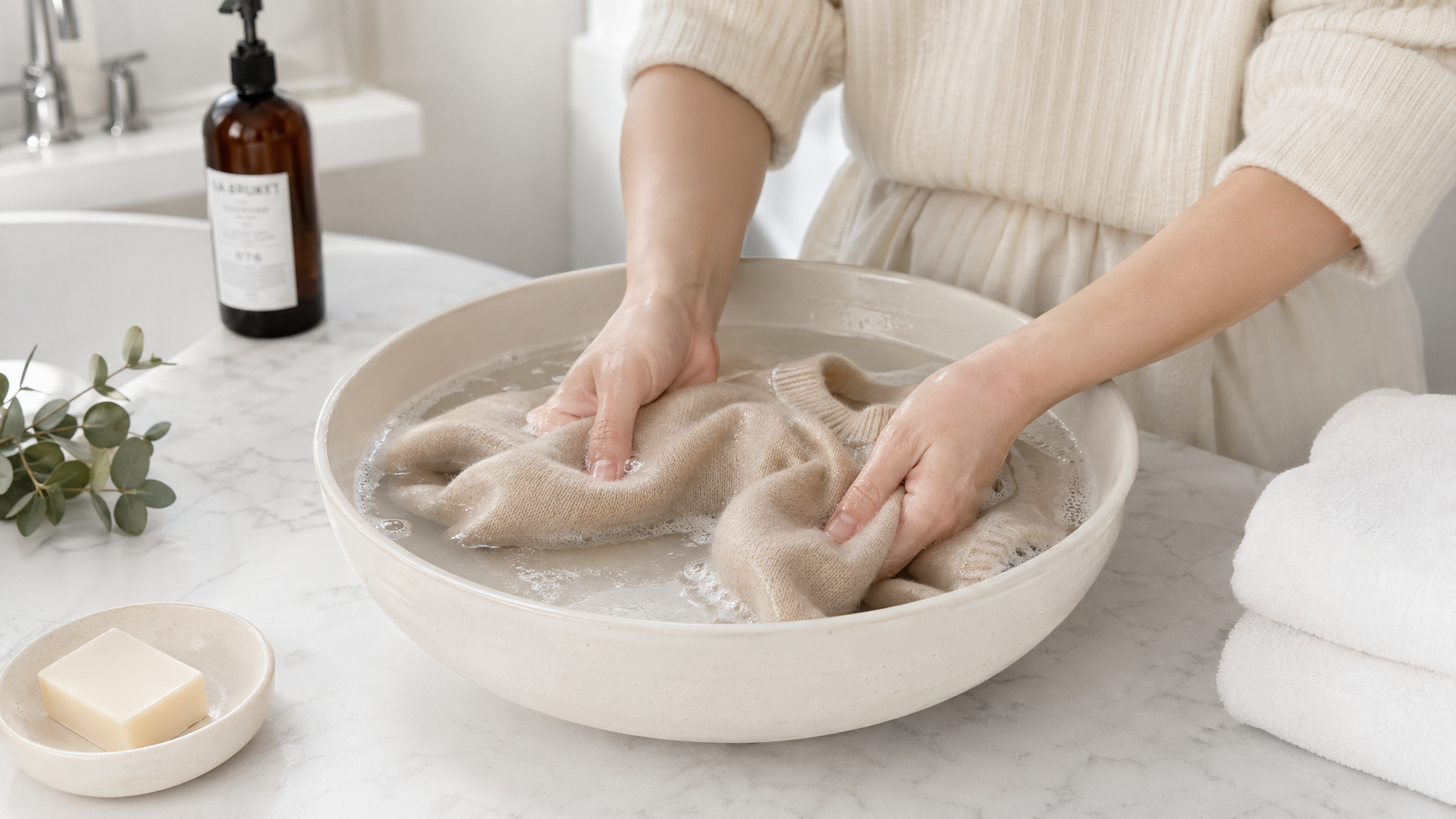
Gentle hand washing of a cashmere sweater in a ceramic bowl with mild soap and cool water
Hand washing in cool water (max 30°C) with pH-neutral detergent is ideal
Woman gently using a fabric shaver to remove pills from a cashmere sweater in a bright apartment
A cashmere comb or fabric shaver removes pills without damaging the underlying fibre
Neatly folded cashmere sweaters stored in a wooden wardrobe with cedar blocks and lavender sachets
Proper storage — folded flat, with cedar or lavender — prevents moth damage and maintains shape

Why Cashmere Rewards Careful Owners

Cashmere is simultaneously delicate and incredibly durable — but only when treated correctly. The same natural properties that make it so luxuriously soft (fine fibre diameter, natural crimp, protein-based structure) also make it responsive to both good and bad treatment.

Unlike synthetic fibres, cashmere is a protein fibre (like human hair) that responds to pH, temperature, and mechanical stress. Alkaline detergents, hot water, and aggressive agitation all damage the protein structure irreversibly. But warm water, gentle handling, and mild soap actually improve cashmere over time — opening the fibre's natural scales slightly to allow cleaning, then allowing them to close during drying to create the characteristic "bloom" of well-tended cashmere.

🌟 The Golden Rule

The single most important rule in cashmere care: never machine-wash on a normal cycle, never use hot water, and never wring or twist wet cashmere. These three actions together are responsible for the majority of cashmere damage. Everything else is nuance.

Step-by-Step

How to Hand Wash Cashmere

Follow these eight steps for perfect results every time — and cashmere that gets softer with every wash.

1

Check the Label First

Always read the care label before washing. Most quality cashmere can be hand-washed, but some heavily embroidered or constructed pieces may genuinely require dry-cleaning. If the label says "dry clean only" and it's a plain sweater, the manufacturer is being overly cautious — but respect any specific instructions for complex pieces.

2

Fill a Basin with Cool Water

Use lukewarm to cool water — ideally 25–30°C (77–86°F). Never use hot water: it causes irreversible felting (shrinking and matting) of the protein fibres. If your garment has colours that might run, test an inconspicuous area first. A clean ceramic, glass, or plastic basin is ideal — avoid metal sinks which can harbour residual chemicals.

3

Add a Mild, pH-Neutral Detergent

Use a specialist wool wash (such as Woolite, Eucalan, or The Laundress Wool & Cashmere Shampoo) or a very small amount of mild baby shampoo. These products are pH-neutral (around 7) and won't damage the protein structure. Never use standard laundry detergent, biological/enzyme detergents, or fabric softener — all are harmful to cashmere fibres.

4

Submerge Gently & Soak

Place the garment in the water and gently press it down to saturate fully. Do not rub, wring, or agitate. Allow to soak for 10–15 minutes. For lightly worn items, soaking alone is sufficient to remove body oils and light soil — the gentle agitation of the water molecules does the work without mechanical stress on the fibres.

5

Rinse Thoroughly

Drain the soapy water and refill with clean, cool water at the same temperature. Press the garment gently to rinse — again, no rubbing or wringing. Repeat until no soap remains (the water should run clear and produce no suds). Incomplete rinsing leaves detergent residue that stiffens the fibre and attracts soil in storage. Two to three rinse cycles are usually sufficient.

6

Remove Excess Water Gently

Lift the garment carefully — wet cashmere is heavy and prone to stretching if held at one end. Support the full weight. Press (do not wring) excess water out against the basin wall. Then lay the garment flat on a clean, dry towel, fold the towel over the garment, and gently roll them together. Press the roll firmly to transfer moisture to the towel. Unroll and transfer to a fresh dry towel or drying rack.

7

Dry Flat in Natural Shape

Lay the garment flat on a clean towel or mesh drying rack in its natural shape. Gently ease any distorted areas back into form. Never hang wet cashmere — the weight will cause irreversible stretching, particularly at the shoulders. Keep away from direct sunlight (causes colour fading and fibre degradation) and heat sources. Allow to air dry completely — typically 12–24 hours — before storing or wearing.

8

Steam to Restore Shape (Optional)

Once dry, a gentle steaming (using a clothes steamer or iron on steam-only setting, held 2–3cm from the fabric) can restore the natural loft and drape of cashmere. The steam relaxes the fibres and allows the natural crimp to re-establish. Never iron cashmere directly — always use a pressing cloth or steam-only. This final step is optional but notably improves the handle of freshly washed pieces.

Quick Reference

Cashmere Care Do's & Don'ts

✓ Always Do
  • ✓ Hand wash in cool water (≤30°C)
  • ✓ Use pH-neutral, specialist wool detergent
  • ✓ Dry flat on a clean towel away from sunlight
  • ✓ Store folded (never hung) in breathable cotton bags
  • ✓ Use cedar balls or lavender sachets in storage
  • ✓ Allow garment to rest 24h between wears
  • ✓ Depill after every 3–5 wears with a cashmere comb
  • ✓ Wash before long-term storage (perspiration attracts moths)
  • ✓ Address stains immediately by gently dabbing (not rubbing)
  • ✓ Steam gently to refresh between washes
✗ Never Do
  • ✗ Machine wash on a normal cycle (delicate cycle may be acceptable with a mesh bag)
  • ✗ Use hot water (causes felting and irreversible shrinkage)
  • ✗ Wring, twist, or agitate the wet fabric
  • ✗ Hang cashmere to dry (causes stretching)
  • ✗ Use biological/enzyme detergent or fabric softener
  • ✗ Iron directly without a pressing cloth
  • ✗ Store in plastic bags (traps moisture, promotes mildew)
  • ✗ Store with strong perfume or mothballs (chemical damage)
  • ✗ Apply hairspray, perfume, or deodorant directly to cashmere
  • ✗ Dry in direct sunlight or near heat sources
Common Concern

Understanding & Managing Pilling

Pilling is not a defect — it is a natural characteristic of protein fibres. Understanding why it happens helps you manage it confidently.

Why cashmere pills: During wear, friction causes short individual fibres to migrate to the surface and tangle together, forming small fibre balls (pills). This is most pronounced in areas of high friction: underarms, between the thighs, cuffs, and collar areas. All natural fibres pill to some degree; the difference is whether pills are easily removed and whether the underlying fabric remains intact.

How to remove pills: Use a purpose-made cashmere comb or fabric shaver. Lay the garment flat on a hard surface. Hold the fabric taut with one hand and pass the comb or shaver lightly over the surface — never press hard. The pills lift away cleanly, revealing the pristine surface beneath.

The good news: After the initial "break-in" period (first 3–5 wears), high-quality cashmere pills significantly less because the loose surface fibres have been removed. The underlying fabric only improves from this point.

Woman using a cashmere comb to gently remove pills from a sweater in a bright, airy apartment
Long-Term Care

Seasonal Storage Guide

Proper storage is as important as proper washing — particularly for protection against moths, the greatest enemy of natural fibres.

🌸

Spring (Putting Away)

Always wash before storage — perspiration and food traces attract clothes moths. Dry completely before folding.

☀️

Summer Storage

Store folded (never hung) in breathable cotton or muslin bags or pillowcases. Add cedar blocks or lavender sachets. Keep in cool, dark, dry location.

🍂

Autumn (Bringing Out)

Inspect for any moth damage before wearing. Air the garment for several hours before first wear of the season. Steam gently to restore freshness.

❄️

Winter Rotation

Allow 24 hours between wears for the fibres to recover their natural loft. Wash every 3–5 wears — or more frequently if heavily soiled.

🦋 The Moth Threat

Clothes moths (Tineola bisselliella) are the single greatest threat to stored cashmere. Their larvae feed exclusively on protein fibres including cashmere, wool, and silk. Prevention is far easier than cure: always wash before storage, use natural deterrents (cedar, lavender — not mothballs which contain toxic naphthalene), and store in sealed cotton bags. Check stored items every month during the storage period and air them in sunlight if moths are suspected.

Tools of the Trade

Recommended Care Products

These specific tools make a measurable difference to cashmere longevity.

🧴

Specialist Wool Wash

Eucalan, Woolite Dark, or The Laundress Wool & Cashmere Shampoo. pH-neutral, rinse-free options minimise handling time. Avoid enzyme-based products.

🪮

Cashmere Comb / Fabric Shaver

A fine-toothed tortoiseshell comb or purpose-made fabric shaver. Use on flat, dry garments only. The D-Fuzz-It Comb and Gleener Ultimate Fuzz Remover are highly rated.

🪵

Cedar Blocks

Natural cedar wood repels moths through its volatile oils. Refresh with light sandpaper annually. Place 2–3 blocks per drawer or storage bag. Replace every 2–3 years.

💜

Lavender Sachets

Dried lavender is a traditional, completely safe moth deterrent. Replace annually as the scent fades. Combine with cedar for maximum protection without toxic chemicals.

🧺

Mesh Laundry Bag

If machine-washing on a delicate/wool cycle (acceptable for sturdier pieces), always use a fine mesh laundry bag to minimise friction and mechanical stress.

♨️

Clothes Steamer

Handheld steamers refresh cashmere between washes, remove odours, restore drape, and reduce the frequency of full washes needed — extending the life of your garment significantly.

Cashmere Repair: Extend Life Indefinitely

The most sustainable cashmere garment is the one you already own — repaired and kept in service for decades rather than replaced.

Moth Hole Repair

Small moth holes (under 5mm) can be invisibly repaired using a technique called "invisible weaving" or "reweaving" — pulling fibres from a hidden seam to patch the hole. Larger holes require specialist darning using matching yarn. Many specialist knitwear repair services offer this service; some premium cashmere brands (Johnstons of Elgin, for example) will repair their garments for free.

Unravelling Seams

Woven seams can be re-sewn using a fine needle and matching cashmere or silk thread. For knitted seams, use a darning needle threaded with a strand pulled from the garment's cast-off edge. YouTube tutorials from specialist knitwear repair channels provide excellent visual guidance for confident home repair.

Snagged Fibres

Never cut a snag. Instead, use a blunt needle or a snag repair tool to gently pull the protruding loop through to the inside of the garment. Pulled fibres can be re-integrated; cut fibres create a permanent hole. Working from the inside, carefully ease the snag back until the surface of the fabric is smooth.

Professional Restoration

For valuable or heavily damaged cashmere pieces — particularly heirloom Pashmina shawls — professional restoration services exist in Kashmir (Srinagar), Scotland (Edinburgh, Hawick), and Italy (Biella region) with experience in working with the finest cashmere and Pashmina. The cost of professional restoration is almost always less than the replacement value of a quality piece.

Deepen Your Knowledge

Explore Our Full Glossary & FAQs

Still have questions? Our comprehensive glossary and FAQ section has answers to over 50 common cashmere questions.

Visit Glossary & FAQs →