Know What You're Buying
The Cashmere Quality Guide
Authentication tests, grade comparisons, price benchmarks, and 12 myths debunked — everything you need to buy cashmere with confidence.
⏱ 11 min read

Before You Buy
5 Authentication Tests You Can Do In-Store
No laboratory required. These five sensory and visual tests can separate genuine cashmere from imitations in under two minutes.
1
The Touch Test
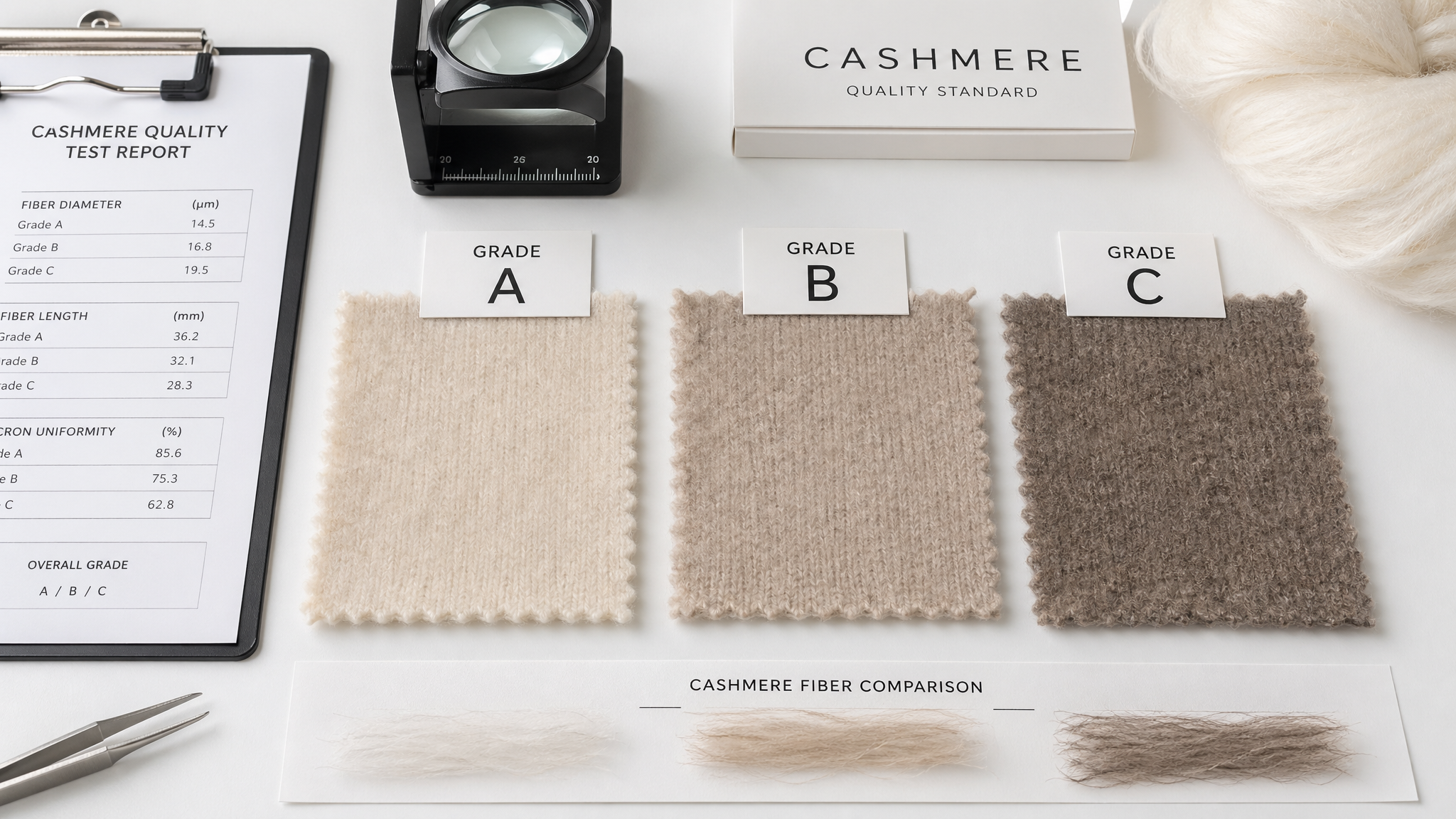
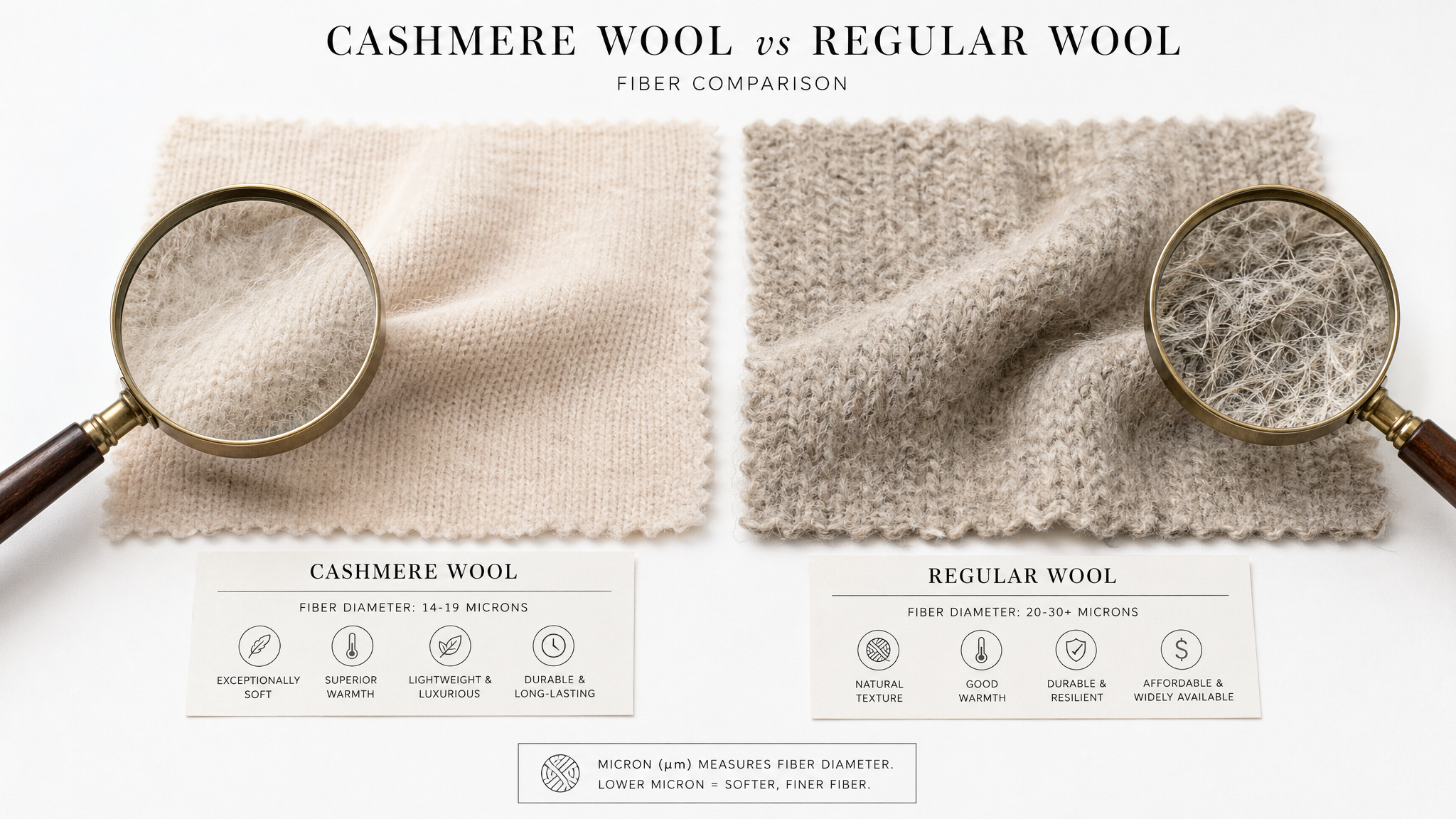
Rub the fabric gently against your inner wrist or cheek — the most sensitive skin areas. Genuine Grade A cashmere (≤15.5 µm) causes zero irritation and feels like a warm breath of air. Any scratching or prickling indicates low-grade cashmere (Grade C), a heavy blend, or outright synthetic. Note: even genuine cashmere may feel slightly rough when brand new due to finishing; it softens after the first wash.
2
The Pilling Rub Test
Fold the fabric and rub two sections together briskly for 10–15 seconds. Genuine high-quality cashmere (long staple, well-constructed) will show minimal or no pilling in this test. Cheap cashmere (short staple, low ply) or synthetic blends will produce visible pills immediately. Some initial pilling in the first few wears is normal even for good cashmere — excessive instant pilling is a warning sign.
3
The Stretch & Recovery Test
Gently stretch a section of the fabric to about 150% of its length, hold for five seconds, then release. Genuine cashmere has natural elasticity from its crimped fibre structure and will spring back to near its original shape within a second or two. Poor-quality cashmere and synthetic blends lose their shape quickly and may show visible distortion in the stretched area. This test is particularly revealing for knitted garments.
4
The Light Test
Hold the garment up to a strong light source (daylight or a spotlight). Genuine tightly-woven or knitted cashmere should have an even, consistent density with no thin patches or uneven areas. You should see a warm, slightly translucent glow from the fibre itself. Synthetic fibres appear flat and plastic; cheap wool blends show uneven density. This test works best on knitted garments and woven accessories.
5
Read the Label (Carefully)
Under EU, US, and Indian textile labelling laws, any garment must accurately state fibre composition. Look for "100% Cashmere" — not "cashmere-blend," "cashmere-like," or just "wool." Country of origin should also be stated. Red flags: no composition label at all; "cashmere touch" or similar vague language; labels in only one language on an imported product. Legitimate high-end cashmere will often specify grade, micron count, and certifications.
+
The Price Sanity Check
This is not a tactile test, but it may be the most reliable indicator of all. Given that raw cashmere costs $80–$200 per kilogram, that a sweater uses 200–300g of fibre (plus dyeing, knitting, finishing, retail margin), genuine cashmere cannot be profitably sold at under £80–$100. If a "cashmere" sweater is priced below this threshold, the "cashmere" is either blended, mislabelled, or of very poor quality.
Price Reality Check
What Should Cashmere Cost?
Price is not the only indicator of quality — but it is the most immediate red flag for fraud.
✓ Likely Genuine
$100–$800+
Per sweater, depending on grade, ply, brand and origin
- • 100% composition label
- • Grade/micron often stated
- • Named country of fibre origin
- • GCS, OCS, or GI certification
- • Minimal initial pilling
⚠ Treat with Caution
$40–$100
May be genuine Grade C cashmere, a blend, or short-staple low-grade product
- • Likely Grade C (17–19 µm)
- • May be cashmere/wool blend
- • Apply tactile tests carefully
- • Expect more pilling over time
- • Shorter lifespan likely
✗ Almost Certainly Not Cashmere
Under $40
Below the raw material cost threshold for genuine product
- • Acrylic or synthetic blend
- • Viscose/rayon "cashmere touch"
- • Mislabelled product
- • Will pill, stretch, lose shape quickly
- • Environmental and ethical concerns
Common Misconceptions
12 Cashmere Myths, Debunked
Separating fact from fiction across quality, origin, care and sustainability.
Fact: Italy produces exceptional finished cashmere through superior spinning and finishing techniques — but Italian mills typically source raw fibre from Mongolia, China, or Ladakh. "Made in Italy" refers to the manufacturing process, not the fibre's origin. The finest raw cashmere actually comes from the Changtang plateau of Ladakh, India, and the Alashan region of Inner Mongolia. Italian excellence lies in processing and finishing, not in the raw material.
Fact: Grade A cashmere (≤15.5 microns) is softer than the finest silk against the skin and causes zero irritation for virtually all people. Itchiness is a reliable indicator of low-grade cashmere (Grade C, 17–19 µm), heavy blending with coarser wool, or poor dehairing leaving guard-hair contamination. If your cashmere itches, you don't have good cashmere.
Fact: Price is a necessary but not sufficient condition for quality. A $500 designer cashmere sweater may be made from the same Grade B fibre as a $150 brand-specific one — you're paying for the label, design, and retail overhead. Conversely, some exceptional value cashmere is available from specialist mills with transparent supply chains. The smartest buyers focus on fibre grade, staple length, and ply rather than brand name alone.
Fact: Some pilling in the first few wears is normal even for the finest cashmere — it's caused by short fibres migrating to the surface during the break-in period. This pilling can and should be removed with a cashmere comb or fabric shaver, revealing the finished surface underneath. After this initial break-in period (3–5 wears), high-quality cashmere should pill minimally. Excessive, ongoing pilling does indicate shorter staple length or lower quality construction.
Fact: Dry-cleaning cashmere is not only unnecessary — the harsh chemicals used can actually degrade the fibre over time. Genuine cashmere can and should be hand-washed in cool water (max 30°C) with a mild, pH-neutral detergent or specialist wool wash. This is gentler on the fibre, more sustainable, and produces better results. See our full Care & Maintenance guide for step-by-step instructions.
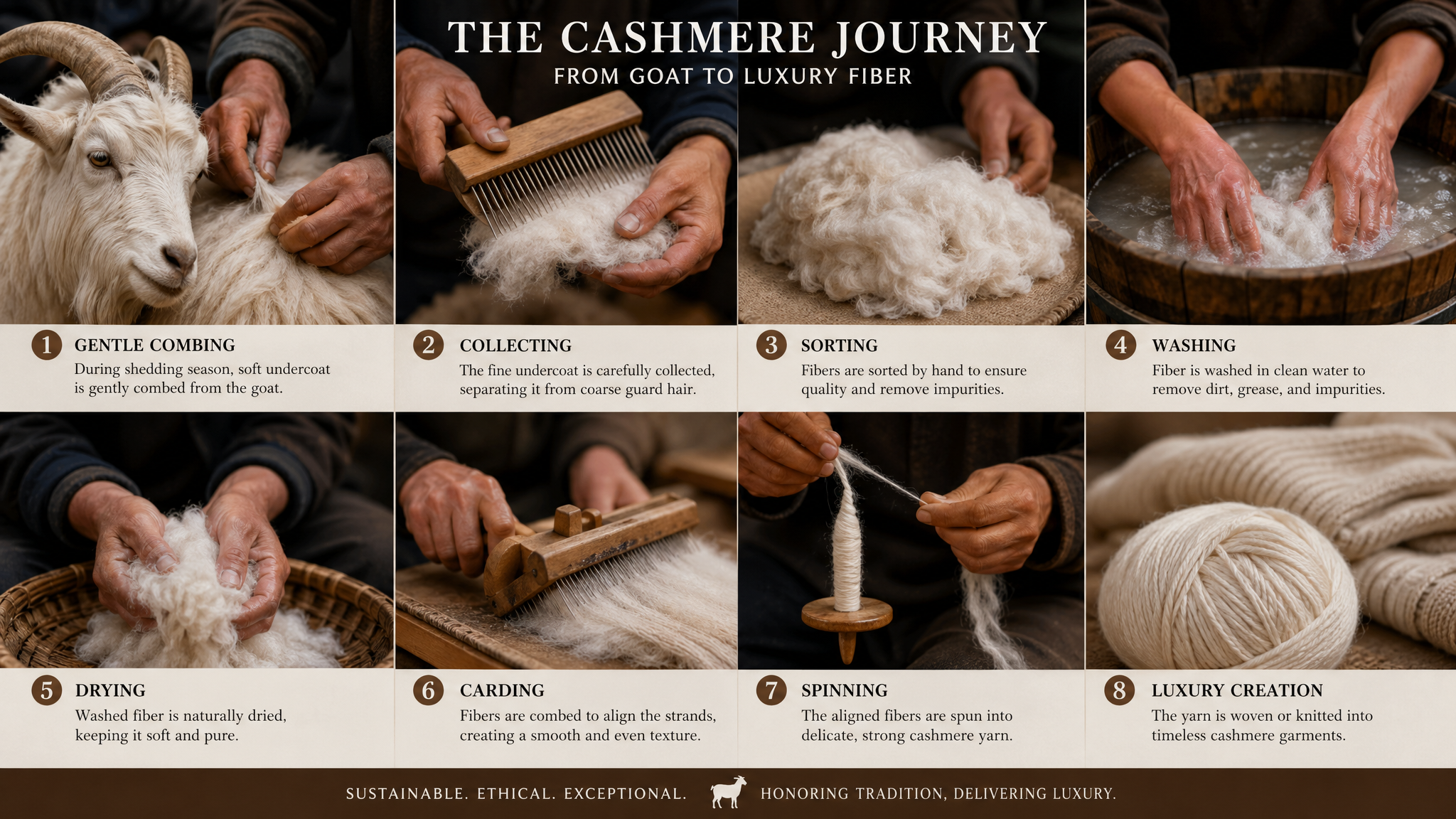
Fact: The sustainability picture is nuanced. Overgrazing is a genuine problem in parts of Mongolia and Inner Asia driven by excessive demand from fast fashion. However, traditional Ladakhi and Kashmiri production — low volume, hand-combed, with deeply ingrained pastoralism practices — has been sustainable for centuries. GCS-certified and responsibly managed cashmere has a lower environmental impact than many synthetic alternatives over a full lifecycle. The key is choosing certified, traceable products. Read our full Sustainability guide.
Fact: Pashmina is cashmere — specifically, it refers to the ultra-fine (≤16 µm) cashmere harvested from the Changthangi goat of Ladakh. All authentic Pashmina is cashmere; not all cashmere is Pashmina. The confusion arises because "Pashmina" has been heavily misused as a marketing term for cheap acrylic or viscose scarves — particularly in tourist markets — which has nothing to do with genuine Pashmina.
Fact: Cashmere's warmth-to-weight ratio is one of its defining advantages. A fine, lightweight cashmere sweater can be significantly warmer than a heavy wool jumper of twice the weight. The warmth comes from the fibre's natural crimp, which traps air in millions of tiny pockets. More ply (2-ply vs 1-ply) does increase warmth and durability, but sheer weight is not a quality indicator. Some of the finest Pashmina shawls weigh under 100g yet provide exceptional warmth.
Fact: Mongolia produces large volumes of cashmere across a wide quality spectrum. While Mongolian cashmere from high-altitude regions of the Gobi can be excellent (averaging 16–17 µm), the dramatic expansion of goat herds in recent decades to meet global demand has led to overgrazing and a measurable decline in average fibre fineness. "Mongolian cashmere" as a blanket quality claim is misleading without specific grade information.
Fact: Properly hand-washed cashmere actually becomes softer and develops better handle with each wash. The natural lanolin content gradually adjusts, fibre crimps realign after drying, and the surface bloom develops more fully. Cashmere deteriorates from incorrect washing (machine-washing on wrong cycle, hot water, harsh detergent, wringing) — not from washing per se. With correct care, cashmere garments improve over decades.
Fact: Ply refers to the number of yarns twisted together to form the final strand. 2-ply is warmer, more durable, and less prone to pilling than single-ply of the same yarn count. However, a 1-ply garment made from Grade A (14–15 µm) fibre will outperform a 2-ply garment made from Grade C (18–19 µm) fibre in terms of softness and luxury handle. Ply and fibre grade are independent variables — both matter.
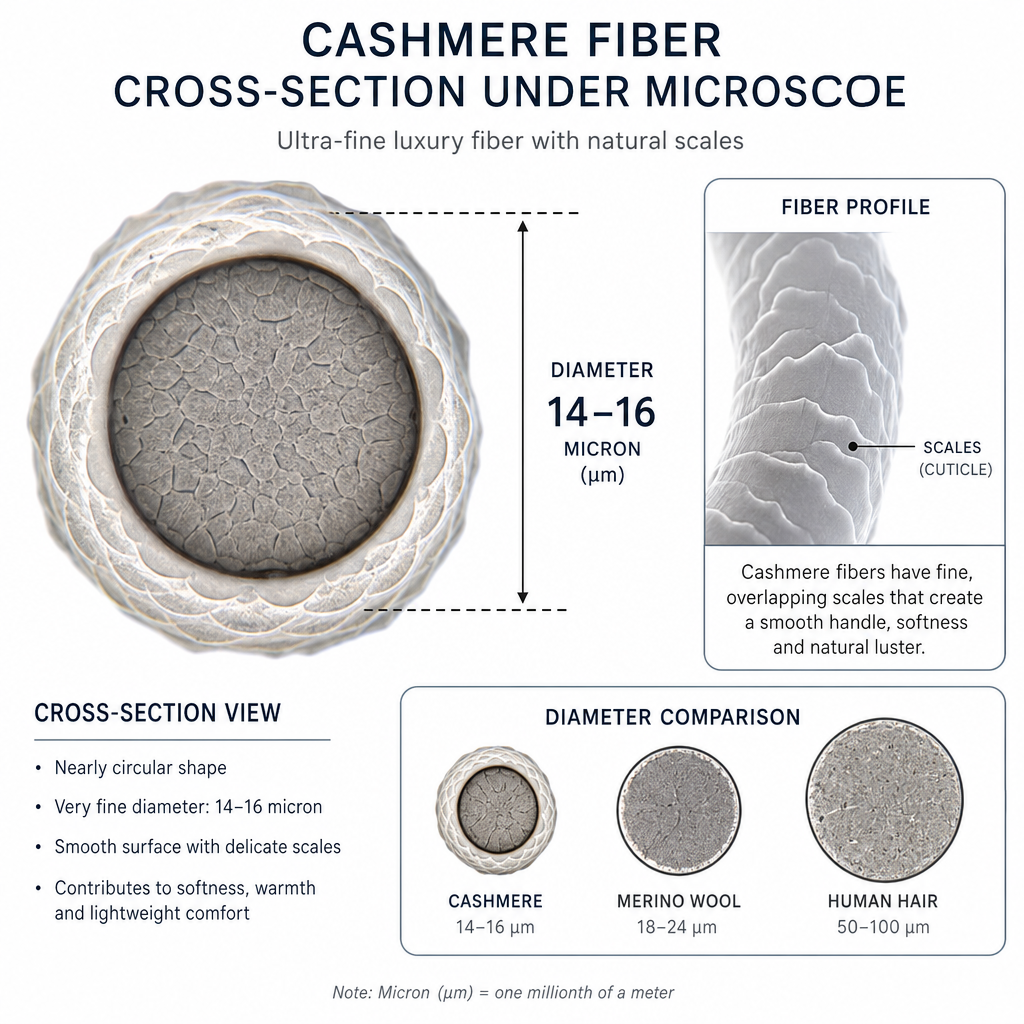
Fact: Modern synthetic blends — particularly acrylic/viscose combinations processed to mimic cashmere's appearance and drape — can be visually indistinguishable from the genuine article. Visual inspection alone is insufficient; tactile tests, label scrutiny, and price assessment must all be applied together. In cases of doubt, laboratory fibre analysis (FTIR spectroscopy or microscopy) can provide definitive authentication. Some online retailers now offer QR-coded certificates with laboratory test results.
Test Your Knowledge
Is Your Cashmere Real?
Six questions to test your cashmere expertise. How well do you really know the fibre?
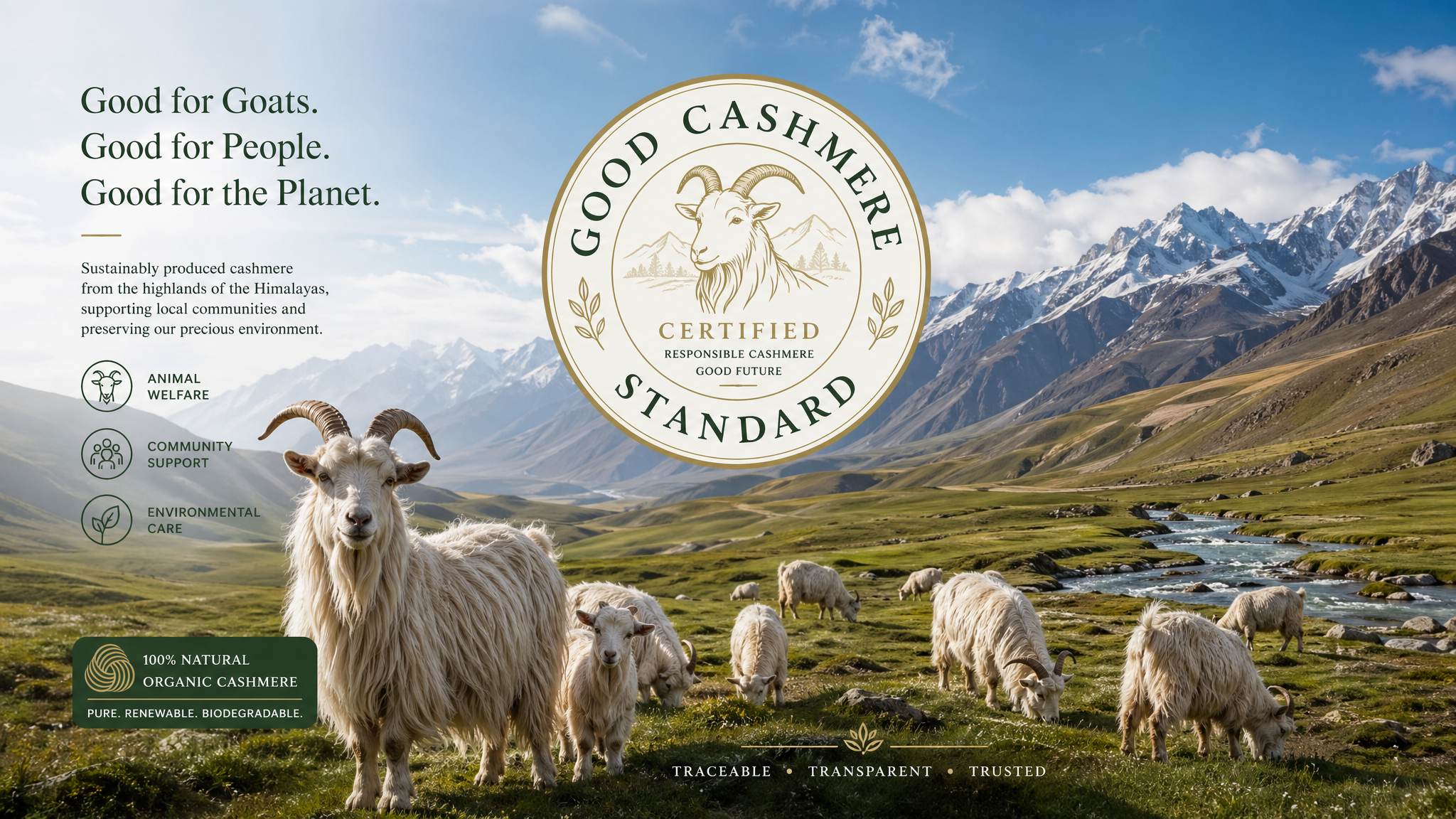
Understand the Bigger Picture
Is Your Cashmere Ethically Made?
Quality matters — but so does where it comes from. Explore our sustainability guide.
Sustainability Guide →